Traditional Clay Pot Meals – A Deep Dive Into Sri Lanka’s Ancient Cooking Heritage
● Introduction Traditional clay pot meals represent one of the most authentic culinary traditions in Sri Lanka. For...

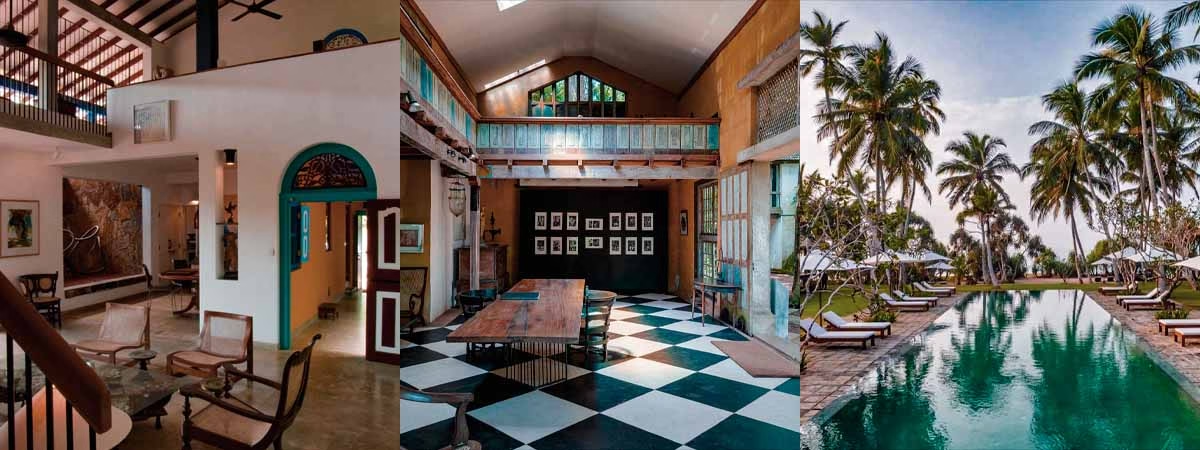
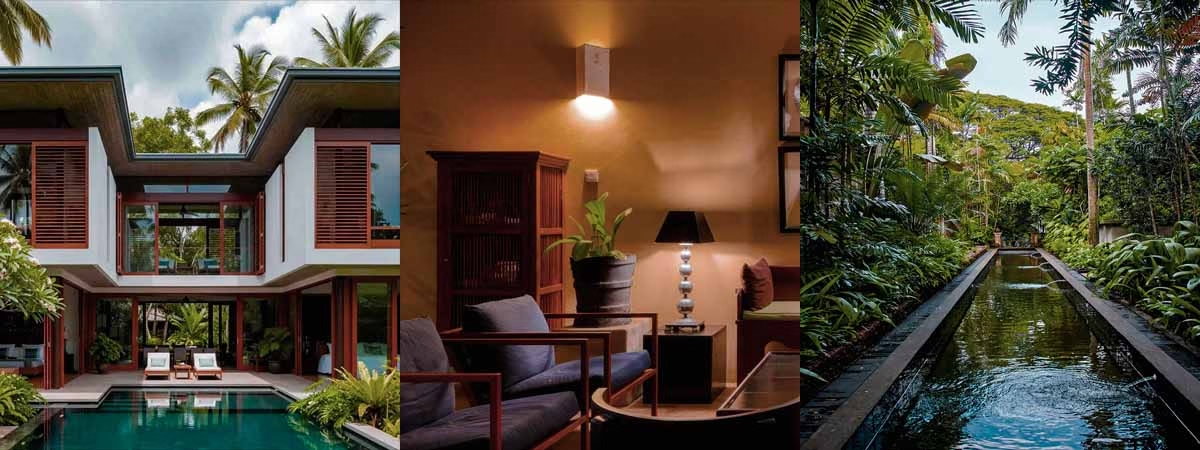
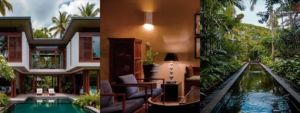
Sri Lanka’s architecture is not defined by monuments alone, but by its relationship with climate, landscape, culture, and memory. Across the island, buildings are designed to breathe with the environment — shaded courtyards, open verandas, reflective pools, and structures that dissolve into gardens and forests. This philosophy reaches its most refined expression through the work of Geoffrey Bawa, whose concept of tropical modernism reshaped architectural thinking across Asia.
This journey explores Sri Lanka through design — from intimate private residences and garden estates to jungle-integrated hotels and colonial coastal towns. Rather than simply visiting buildings, travelers experience architecture through movement, light, texture, and atmosphere.
The itinerary flows naturally from city to coast, forest to highlands, and back again — revealing how Sri Lanka’s architectural identity evolves across geography. Carefully selected hotels become part of the story, allowing guests to live inside the architecture rather than just observe it.
This is not an architectural tour alone — it is a journey through space, silence, and landscape.
Introduction to Tropical Modernism
Destination Significance
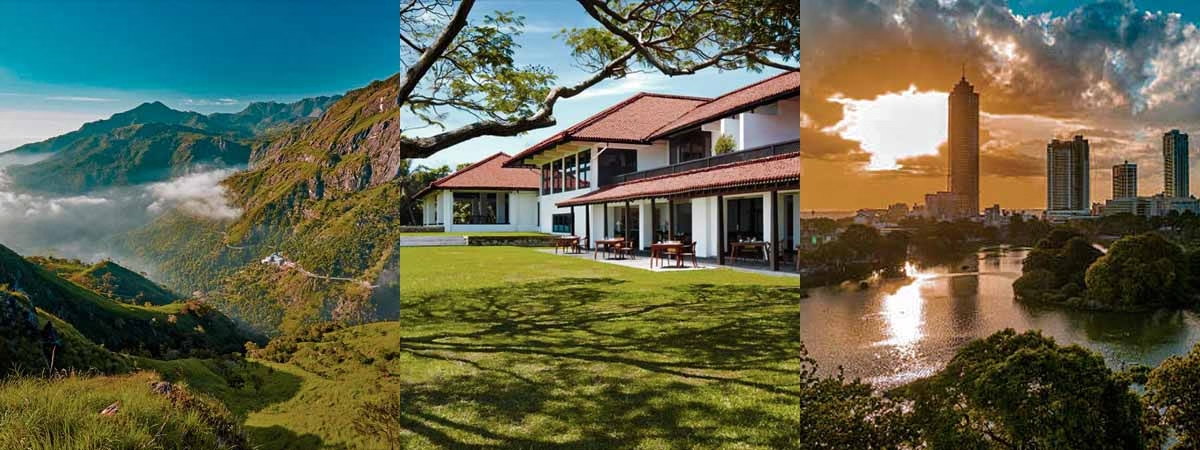
Colombo represents the meeting point of colonial influence and modern Sri Lankan design. Dutch villas, British-era residences, and contemporary tropical modernist buildings coexist within the same neighborhoods.
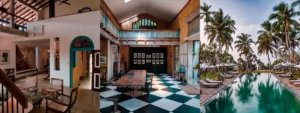
It is here that Geoffrey Bawa’s architectural ideas began to evolve from private experimentation into a broader architectural language. His Colombo residence demonstrates how architecture can be intimate, layered, and emotionally expressive.
Beginning in Colombo provides essential context — helping travelers understand the design philosophy that will unfold throughout the journey.
Day Description
The day begins with a visit to Geoffrey Bawa’s Colombo residence (No.11), where narrow corridors open into unexpected courtyards and light becomes part of the architecture. Movement through the house feels cinematic — spaces revealing themselves gradually.
Later visits explore modern Sri Lankan design influenced by Bawa’s philosophy, where minimalism blends with tropical materials and open-air planning. Architecture becomes a sensory experience shaped by shadow, breeze, and texture.
By evening, Colombo feels quieter and more intimate, seen through the lens of design rather than urban life.
Destination Significance
Bawa’s Colombo residence is one of Sri Lanka’s most important architectural spaces. It demonstrates how architecture can shape emotion through sequence, proportion, and light.
Colombo’s modern design scene reflects how Bawa’s ideas continue to influence contemporary architecture. The city becomes a living classroom for tropical modernism.
This day establishes the intellectual foundation for the journey.
Hotel
Day Description
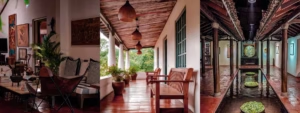
The journey moves south along the coast toward Bentota, where architecture begins merging with landscape. Lunuganga, Geoffrey Bawa’s garden estate, unfolds like a carefully composed painting — terraces, water, sculpture, and trees arranged with artistic precision.
Walking through the estate feels meditative. Views open and close deliberately, guiding visitors through garden “rooms” without walls. Architecture becomes landscape design.
The afternoon is quiet, allowing time to absorb the estate’s atmosphere.
Destination Significance
Lunuganga is where Geoffrey Bawa developed the philosophy that later defined tropical modernism. The estate reflects Sri Lanka’s relationship with land, water, and climate.
Rather than imposing structure on nature, Bawa shaped nature itself as architecture.
This location represents the emotional and philosophical heart of the journey.

Hotel Options
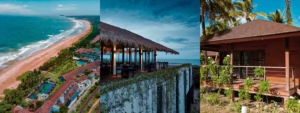
A slower day allows deeper appreciation of coastal tropical modernism. Architecture here feels lighter — open corridors, shaded courtyards, and structures designed to frame ocean views.
The day unfolds gently, blending architectural exploration with time beside the sea. Movement slows, echoing the rhythm of coastal life.
By evening, the relationship between architecture, climate, and landscape becomes instinctive.
Destination Significance
Bentota represents the transition from private architectural experimentation to hospitality design. Bawa’s coastal resorts redefined tropical architecture across Asia.
This region demonstrates how architecture can remain elegant while fully integrated with nature.
Hotel Options
Day Description
The journey continues south toward Galle, where architecture shifts from modernism to layered colonial heritage. Arrival at Jetwing Lighthouse introduces bold geometry, stone textures, and ocean-facing spaces.
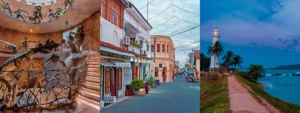
Later, a walk through Galle Fort reveals centuries of architectural evolution — Portuguese, Dutch, British, and Sri Lankan influences coexisting within a living town.
Evening inside the fort feels timeless.
Destination Significance
Jetwing Lighthouse represents Bawa’s dramatic architectural expression, blending sculpture and coastal landscape.
Galle Fort demonstrates Sri Lanka’s layered architectural history — a living example of adaptation across centuries.
Together, they connect past and modern design.
Hotel Options
Day Description
The journey turns inland toward Sri Lanka’s Cultural Triangle. The landscape transitions from ocean to jungle, building anticipation for one of Asia’s most iconic architectural works.
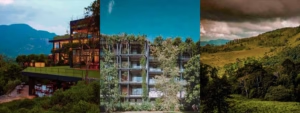
Arrival at Heritance Kandalama feels like discovering a structure hidden within forest. The hotel stretches along a cliff, covered in vegetation, blending seamlessly with its environment.
Evening is quiet and reflective.
Destination Significance
Heritance Kandalama is Geoffrey Bawa’s most celebrated work — a hotel integrated into jungle ecosystem and ancient reservoir landscape.
It represents tropical modernism at its most complete expression.
This is one of the world’s great architectural experiences.
Hotel Options
Day Description
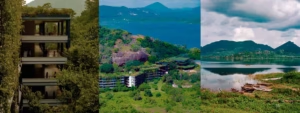
Morning begins slowly at Heritance Kandalama, where architecture and forest feel inseparable. Long open corridors stretch along the cliffside, framing uninterrupted views of the reservoir and distant jungle. The building itself feels alive — vines cascade over concrete walls, birds move freely through shaded spaces, and sunlight filters through trees into the hotel’s interior.
Walking through Kandalama is less like exploring a building and more like moving through landscape. Stairways appear organically from rock, terraces merge into forest edges, and the boundaries between interior and exterior dissolve. The design encourages quiet observation — of light changing across water, of wind moving through corridors, of wildlife passing nearby.
The day allows time to experience these transitions fully. Without scheduled movement, the architecture reveals itself gradually. Even stillness becomes part of the design experience.
By evening, reflections of the forest and reservoir transform the hotel into part of the landscape itself — a rare example of architecture becoming invisible within nature.
Destination Significance
Heritance Kandalama is widely considered Geoffrey Bawa’s most important architectural achievement. Built along a forested rock face overlooking an ancient reservoir, the structure demonstrates how architecture can exist in harmony with ecosystem and terrain rather than dominate them.
The design reflects Sri Lanka’s ancient relationship between water, settlement, and environment — echoing the irrigation systems and forest monasteries of the Cultural Triangle. Over time, vegetation has grown across the building, intentionally allowing nature to reclaim parts of the structure.
Kandalama represents the maturity of tropical modernism — where architecture becomes landscape, and design becomes experience. It stands not only as a hotel but as a philosophy of coexistence between human creation and natural environment.
Hotel Options
Day Description
Leaving the forested plains behind, the journey climbs gently into Sri Lanka’s central hills. The transition from dry-zone jungle to cooler highland landscape is gradual — forests give way to valleys, rivers, and hillside villages.
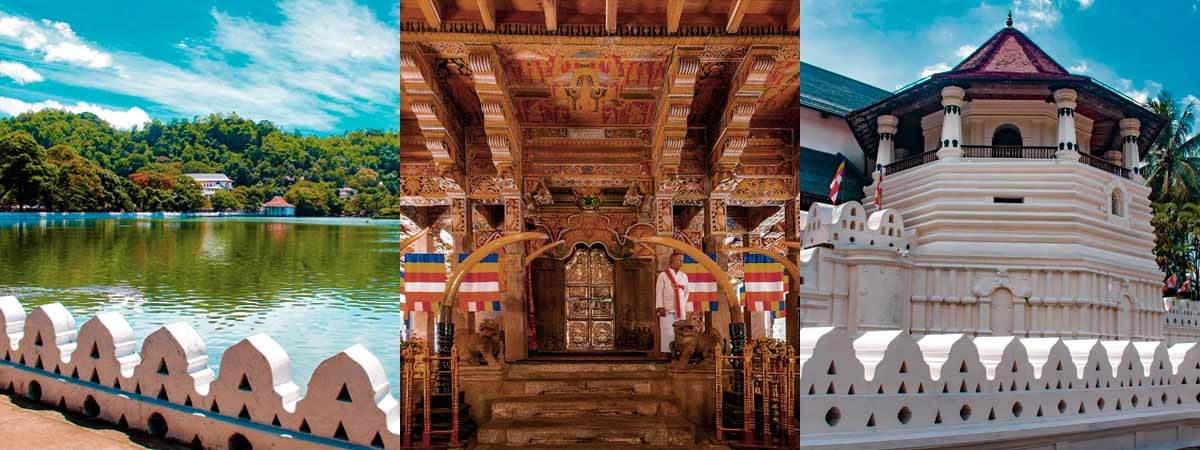
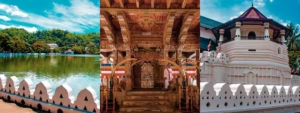
Arrival in Kandy introduces a different architectural atmosphere. The city feels intimate and layered, built around a lake created by the last Sinhala kings. Temples, colonial buildings, and traditional Kandyan homes coexist naturally along narrow streets and quiet hillsides.
In the evening, visiting the Temple of the Sacred Tooth Relic reveals architecture shaped by devotion rather than design theory. The structure is modest yet deeply symbolic, reflecting centuries of spiritual continuity.
Kandy feels quieter than Colombo, more reflective — a place where architecture is shaped by belief, tradition, and landscape.
Destination Significance — Kandy
Kandy was the final royal capital of Sri Lanka and remains the island’s spiritual center. Its architecture reflects Buddhist philosophy, Kandyan royal tradition, and colonial influence layered across time.
The Temple of the Sacred Tooth Relic is one of the most important religious sites in Sri Lanka, symbolizing continuity of monarchy, faith, and cultural identity. Unlike coastal colonial towns or modernist buildings, Kandy’s architecture is shaped by ritual, geography, and spiritual meaning.
Including Kandy in this journey shows how Sri Lanka’s architectural identity extends beyond modernism — connecting design to belief, monarchy, and cultural memory.
Hotel Options
Day Description
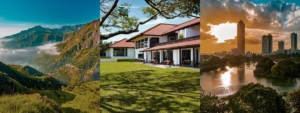
The descent from the hills back toward the western coast brings the architectural journey full circle. Tea estates, forests, and rivers gradually transition into tropical lowlands and coastal plains.
The return to the Colombo coast feels familiar yet different — the architectural journey now complete. Modernist ideas seen earlier in the trip feel more meaningful after experiencing their connection to landscape, history, and tradition.
The afternoon is left open for rest and reflection. Time slows again, echoing the calm beginning of the journey.
Evening by the lagoon or garden provides a gentle conclusion to the architectural exploration of Sri Lanka.
Destination Significance — Western Coast & Lagoon Landscape
Returning to the western coast reinforces the architectural narrative of the journey — from city experimentation to garden landscapes, coastal modernism, jungle integration, and spiritual architecture.
The lagoon environments near Colombo reflect the same relationship between water and settlement that shaped ancient Sri Lankan cities. Geoffrey Bawa’s lagoon-side designs echo these ideas through modern architecture.
Ending the journey here connects the beginning and end of the architectural story, completing the narrative arc.
Hotel Options
Day Description
The final morning is unhurried, allowing space to reflect on the journey. Architecture, landscape, and culture have gradually unfolded across the island — from urban courtyards to coastal gardens, jungle-integrated structures, and sacred highland spaces.
The experience ends not with a single landmark but with a deeper understanding of Sri Lanka’s design philosophy — one rooted in climate, land, and quiet human presence.
A private transfer takes you to the airport, concluding the journey.
Destination Significance — Departure
Departures in Sri Lanka often feel less like endings and more like pauses. The architectural journey leaves behind impressions of light, space, and landscape rather than monuments alone.
The ideas of tropical modernism — openness, harmony with nature, and simplicity — remain long after the journey ends.
This final moment completes the experience with calm continuity.
Highlights
Activities
Hotel Options