Stay at Eco Lodges in Sri Lanka – A Responsible Way to Experience Nature
● Introduction Eco lodges in Sri Lanka offer travelers a meaningful, environmentally conscious way to experience the island’s...

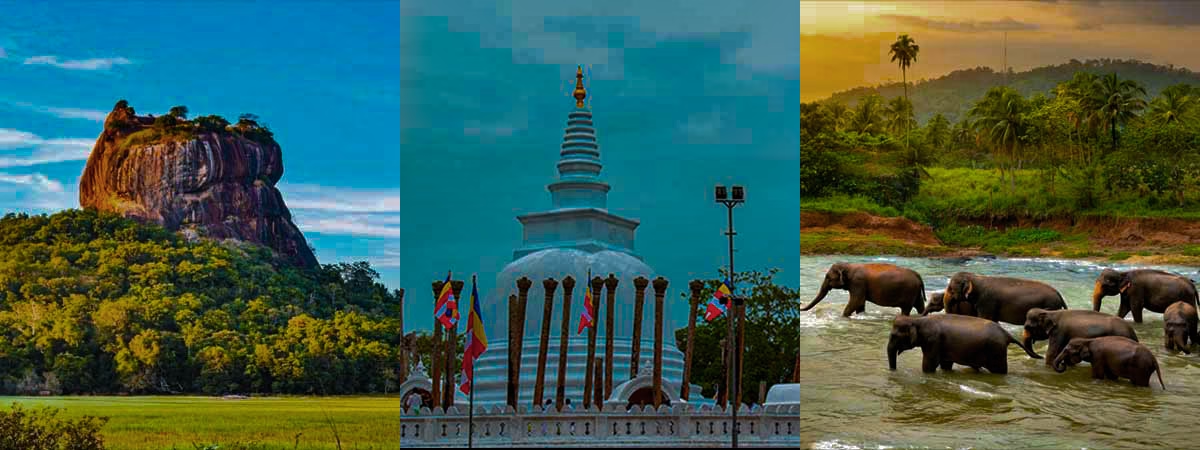
At the heart of Sri Lanka lies a landscape shaped not only by kings and monuments, but by water, devotion, and continuity. The Cultural Triangle is more than an archaeological region — it is where the island’s identity first took form. Here, ancient irrigation systems still nourish farmland, sacred trees remain places of pilgrimage, and rural communities live in quiet proximity to thousand-year-old cities.
This seven-day journey focuses on understanding Sri Lanka’s early civilizations through their sacred spaces, urban planning, and spiritual traditions. From the vast monastery complexes of Anuradhapura to the refined stone artistry of Polonnaruwa and the dramatic Sigiriya Rock Fortress, each site represents a different chapter in the island’s royal and religious history.
Balanced with time in Kandy — Sri Lanka’s spiritual capital — and moments of village life, the journey avoids rushing through monuments. Instead, it allows space to observe how history continues to shape daily life. This is a thoughtful exploration designed for travelers who value depth, context, and cultural continuity.
Distance: ~170 km | Travel Time: 4–4.5 hrs
Day Description (Immersive Narrative)
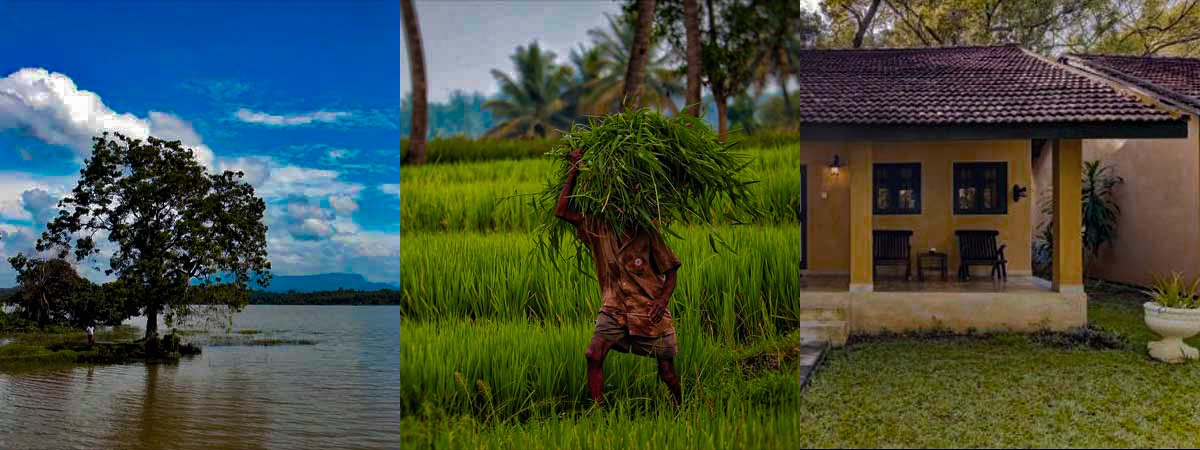
Upon arrival, the journey begins inland, gradually leaving the coastal bustle behind as the road opens into forest corridors and wide plains. Ancient reservoirs shimmer beside village roads, reflecting sky and tree lines in still water. The transition feels immediate — from movement to calm, from modernity to rural continuity.
As you approach the Cultural Triangle, the landscape becomes expansive and grounded. Paddy fields stretch toward the horizon, farmers tend irrigation channels first designed centuries ago, and small roadside shrines quietly mark spiritual presence. The afternoon is intentionally unstructured, allowing time to rest and settle into the pace of the countryside.
The first day establishes the rhythm of the journey — unhurried, contextual, and deeply connected to land.
Destination Significance — Cultural Triangle
The Cultural Triangle represents the foundation of Sri Lankan civilization. From the 3rd century BCE onward, powerful kingdoms flourished here, constructing vast irrigation networks that transformed arid plains into thriving agricultural regions. These reservoir systems — many still operational — remain a testament to advanced engineering and environmental understanding.
Buddhism became deeply rooted in this landscape, shaping governance, architecture, and social organization. Monasteries were integrated into water systems and farmland, creating sustainable urban environments centuries ahead of their time.
Beginning the journey here provides essential context. It introduces Sri Lanka through its origins — where spirituality, agriculture, and governance were inseparable.
Highlights
Activities
Hotel Options:
Habarana Village | Sigiriya Village | Elephas Resort
Day Description (Immersive Narrative)
The morning unfolds within the sacred city of Anuradhapura, where monumental stupas rise above forested grounds and pilgrims move slowly between shrines. The atmosphere is both grand and serene. White-clad devotees offer flowers beneath the shade of ancient trees, while distant temple bells echo softly across the plains.
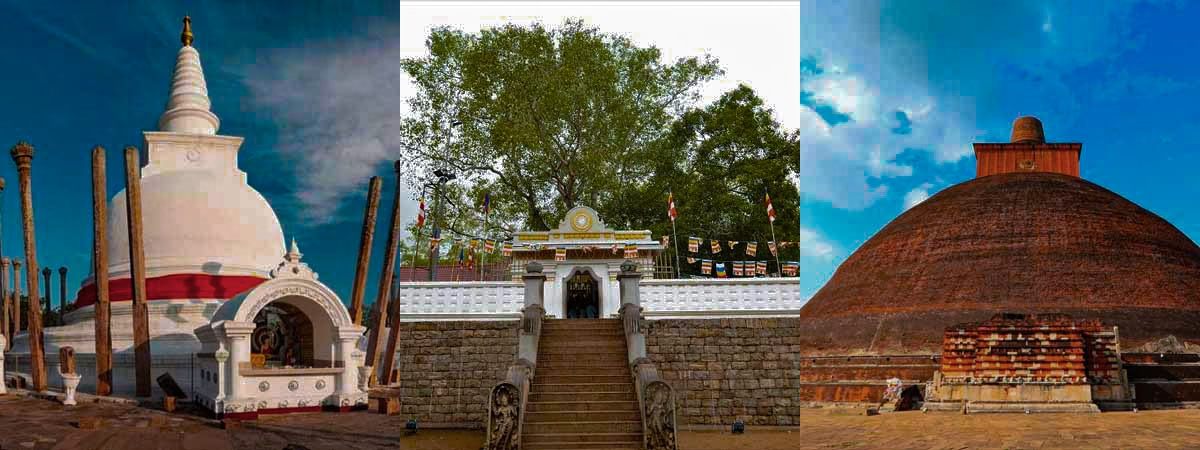
The exploration moves at a measured pace. Vast monastery complexes reveal how monks once lived within organized spiritual communities. Massive brick stupas — some among the largest in the ancient world — stand as symbols of devotion and architectural ambition. The Sri Maha Bodhi tree, believed to have grown from a sapling of the original Bodhi tree in India, remains a living symbol of faith.
Despite its scale, Anuradhapura feels contemplative rather than overwhelming.
Destination Significance — Anuradhapura
Anuradhapura served as Sri Lanka’s capital for over a millennium and became one of the most significant centers of Theravada Buddhism in South Asia. Its urban design integrated reservoirs, monasteries, and administrative zones in a manner reflecting both spiritual priorities and practical governance.
The sacred Sri Maha Bodhi tree is considered the oldest historically documented tree in the world, continuously protected and venerated for over two thousand years. The stupas — including Ruwanwelisaya and Jetavanaramaya — reflect extraordinary engineering capabilities of the ancient Sinhalese civilization.
Including Anuradhapura ensures the journey begins with depth — revealing how devotion and infrastructure shaped early Sri Lanka.
Highlights
Activities
Hotel: Same as Day 01
Day Description (Immersive Narrative)
Polonnaruwa offers a different atmosphere — open plains, serene lakes, and carefully arranged ruins that reflect refined urban planning. The archaeological park feels spacious and thoughtfully organized, allowing exploration without congestion.
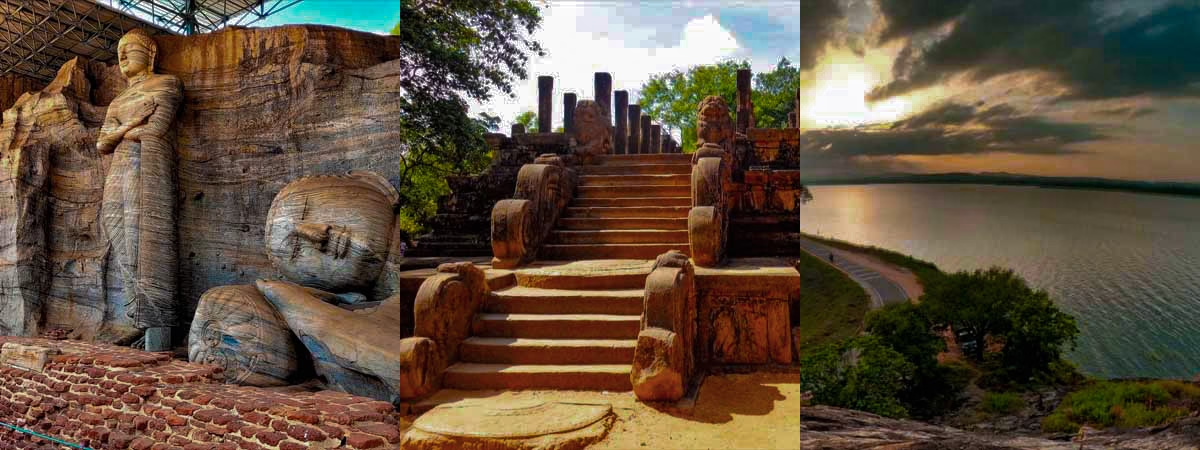
The Gal Vihara statues, carved from a single granite rock face, are among the most remarkable artistic achievements in Sri Lanka. The standing and reclining Buddha figures convey serenity through simplicity, their expressions calm despite centuries of exposure.
Walking through palace ruins and audience halls reveals the ambitions of later kings who sought to revive the glory of earlier kingdoms. The surrounding Parakrama Samudra reservoir glimmers in the distance, reinforcing the connection between water and power.
Destination Significance — Polonnaruwa
Polonnaruwa became the island’s capital during the 11th and 12th centuries after the decline of Anuradhapura. It represents a period of renewal and consolidation, when rulers focused on strong centralized governance and refined architecture.
King Parakramabahu’s irrigation works, particularly the Parakrama Samudra reservoir, demonstrated continued mastery of water engineering. The city’s layout reflects careful planning, integrating religious, administrative, and residential zones.
Polonnaruwa reveals the evolution of Sri Lanka’s royal vision — from expansive sacred cities to more structured urban centers.
Highlights
Activities
Hotel: Same as Day 01
Day Description (Immersive Narrative)
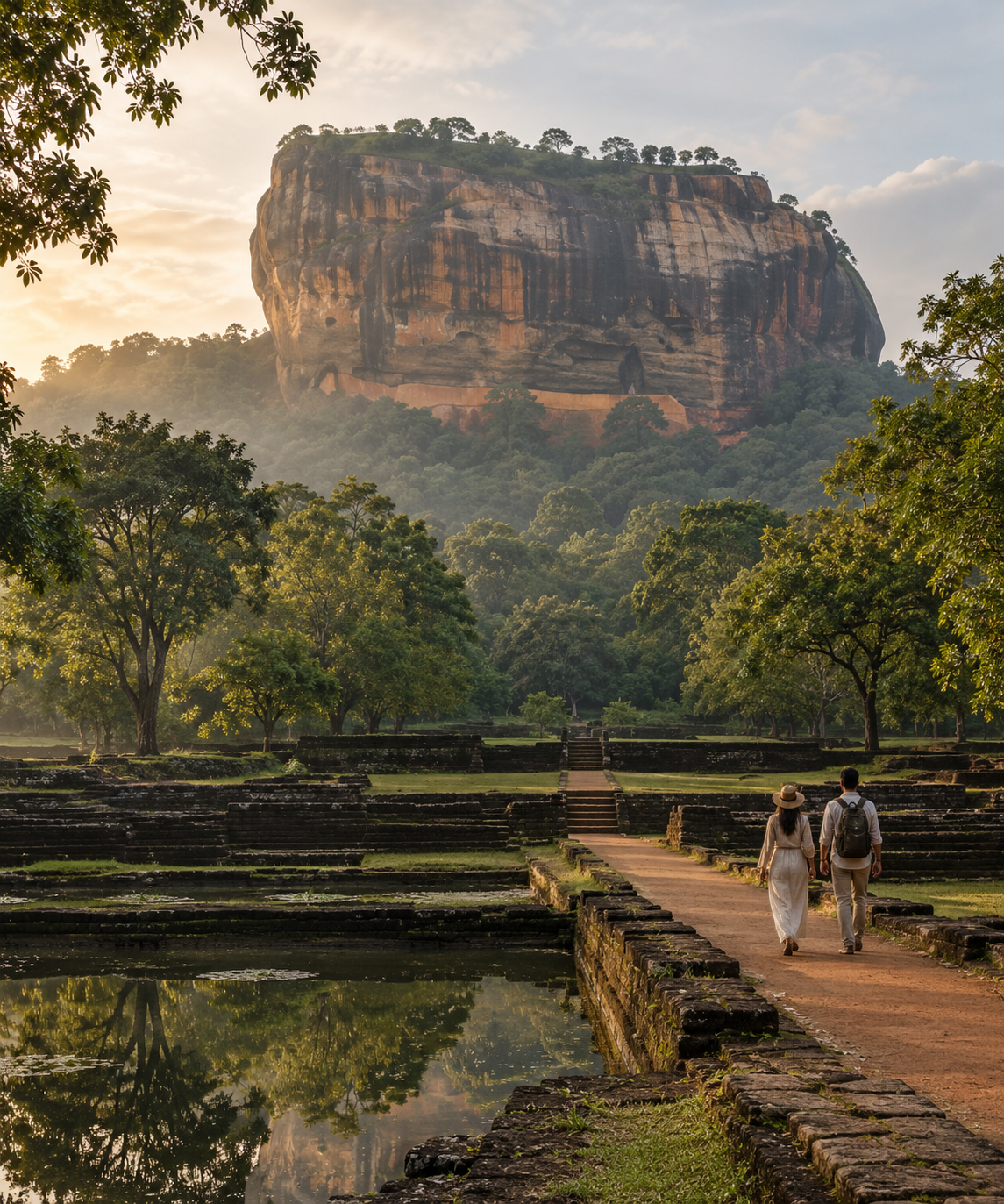
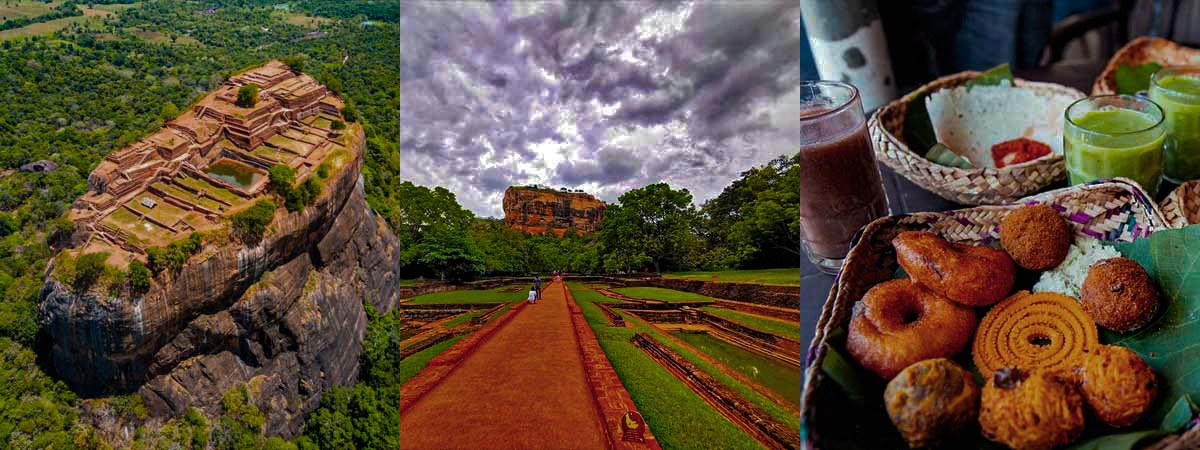
Sigiriya rises dramatically from the surrounding plains — a monumental rock citadel visible from miles away. The ascent reveals landscaped gardens, frescoes painted high on sheltered rock walls, and remains of royal architecture carved directly into stone.
Reaching the summit offers panoramic views across forests and reservoirs — a reminder of how strategically the site was positioned. Wind moves freely at the top, reinforcing the sense of elevation and ambition.
Later, the experience softens into village life. A gentle walk through farmland reveals irrigation channels and seasonal crops, while a traditional meal prepared in a family home offers an intimate glimpse into rural continuity.
Destination Significance — Sigiriya
Built in the 5th century by King Kashyapa, Sigiriya represents one of Asia’s earliest examples of integrated landscape design. Its symmetrical water gardens and hydraulic systems demonstrate advanced engineering, while the frescoes reveal artistic sophistication rarely matched in the region.
Yet beyond the rock, the surrounding villages maintain agricultural practices closely tied to ancient irrigation systems. Farming remains community-based and seasonally aligned.
Including Sigiriya balances grandeur with continuity — royal ambition alongside living rural tradition.
Highlights
Activities
Hotel: Same as Day 01
Distance: ~90 km | Travel Time: 3–3.5 hrs
Day Description (Immersive Narrative)
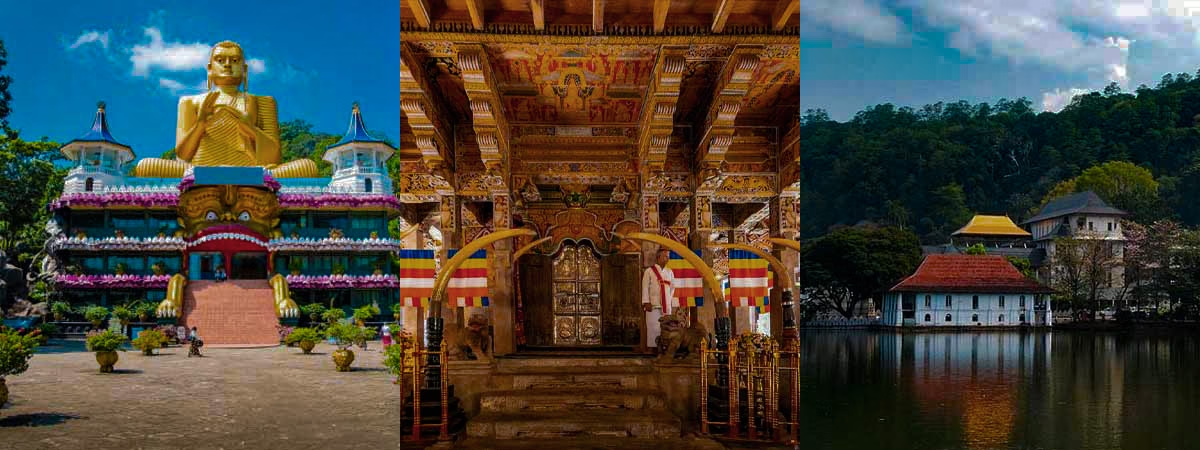
The Dambulla Cave Temple introduces a quieter form of grandeur. Natural rock chambers contain centuries-old murals and serene Buddha statues illuminated by filtered light. The cool interior contrasts with the tropical heat outside, creating an atmosphere of stillness.
Continuing south, the landscape gradually shifts into rolling hills. Arriving in Kandy, the city’s lake reflects temple walls and surrounding greenery. In the evening, you visit the Temple of the Sacred Tooth Relic during a period of worship, when chanting and ceremonial drumming fill the courtyard.
The experience feels living and immediate — not preserved, but active.
Destination Significance — Dambulla & Kandy
Dambulla preserves some of the most extensive and best-preserved Buddhist murals in Sri Lanka, spanning over two millennia of artistic tradition. The cave complex illustrates how natural formations were adapted into sacred environments.
Kandy, as the last royal capital, represents continuity of sovereignty and spiritual authority during colonial encroachment. The Temple of the Sacred Tooth Relic remains central to national identity and religious life.
This transition from ancient cave temple to living spiritual capital reflects Sri Lanka’s uninterrupted devotion.
Highlights
Activities
Hotel Options:
Fox Kandy | Cinnamon Citadel | Theva Residency
Day Description (Immersive Narrative)
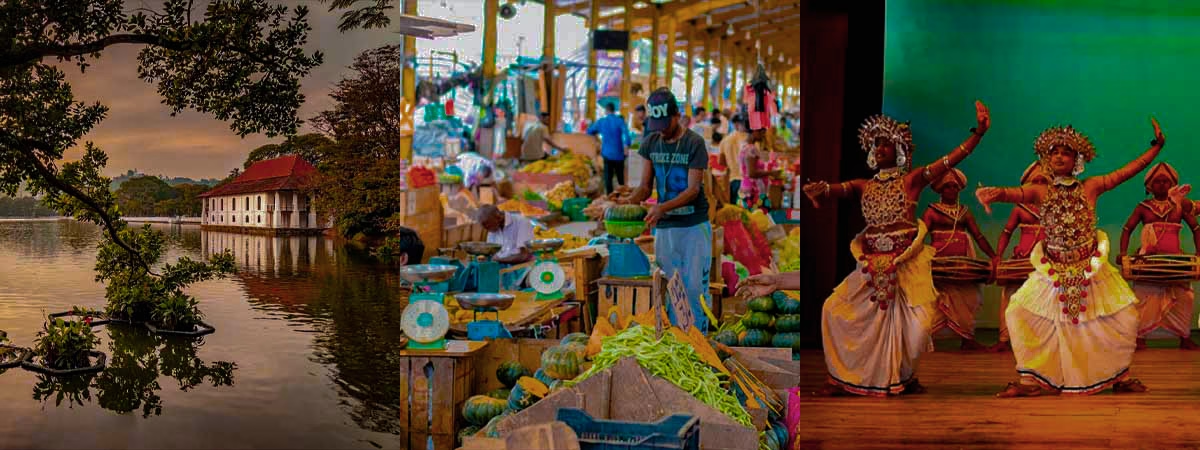
The day in Kandy unfolds slowly. A walk around the lake reveals morning routines — monks in saffron robes, families preparing for market, vendors arranging produce. The city feels intimate and active.
Exploring local markets introduces spices, fruits, and textiles central to daily life. Optional visits to craft workshops or botanical gardens provide additional cultural context. Unlike ancient ruins, Kandy is alive — shaped by religion, commerce, and community.
The hill setting adds softness to the experience.
Destination Significance — Kandy
Kandy remains Sri Lanka’s spiritual and cultural center. Its annual Esala Perahera festival is among Asia’s most significant religious processions. The city’s architecture reflects Kandyan style — modest yet symbolic.
Kandy represents living tradition — where rituals continue uninterrupted and heritage remains embedded in everyday life.
Including a full day here ensures the journey concludes not with monuments alone, but with cultural vitality.
Highlights
Activities
Hotel: Same as Day 05
Day Description (Immersive Narrative)
After breakfast, transfer to the airport.
Destination Significance — Conclusion of the Journey
In seven days, the journey has moved through over two thousand years of Sri Lankan history — from early sacred cities to living spiritual centers. The Cultural Triangle reveals how water, devotion, and governance shaped the island’s foundation.
The experience concludes with a deeper understanding of Sri Lanka’s ancient kingdoms and enduring traditions — a cultural framework that enriches any future exploration of the island.
Highlights
Activities