Conservation Trips in Sri Lanka – Meaningful Travel That Protects Nature
● Introduction Conservation-focused travel has become one of the most meaningful ways to explore Sri Lanka. As an...

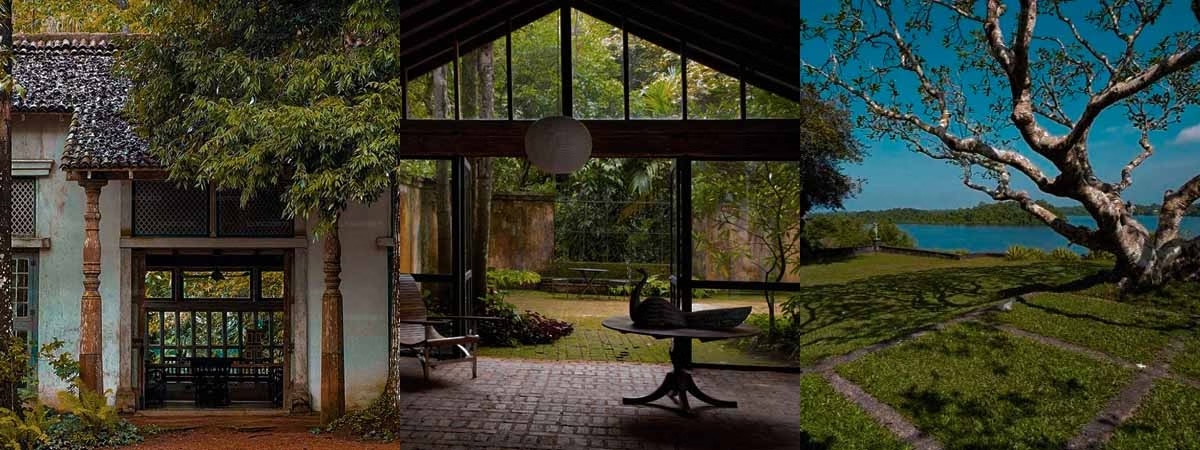
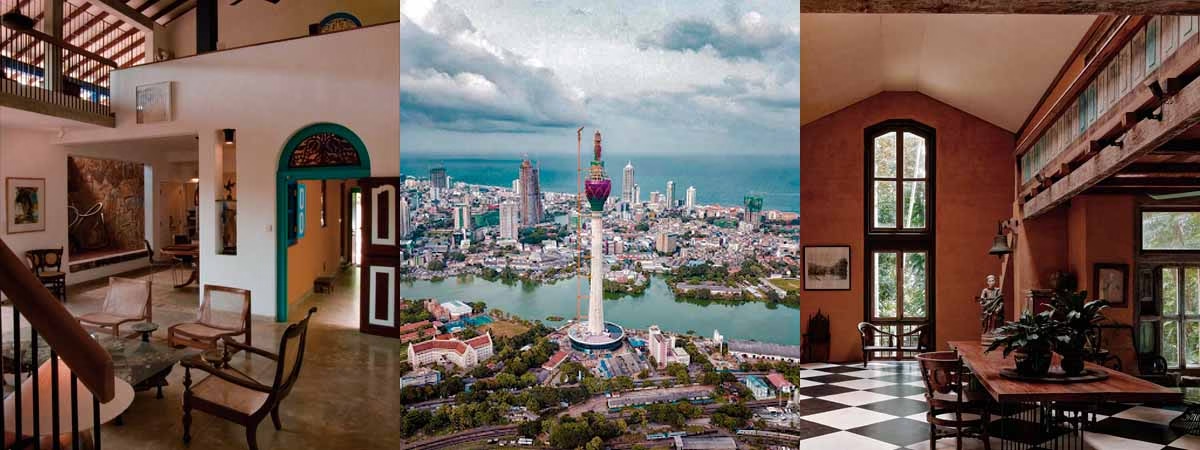
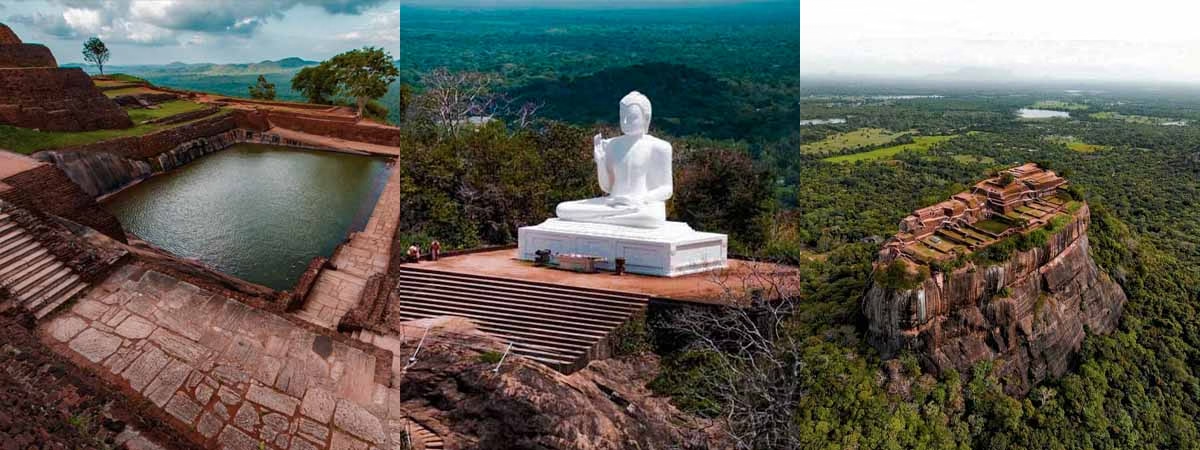
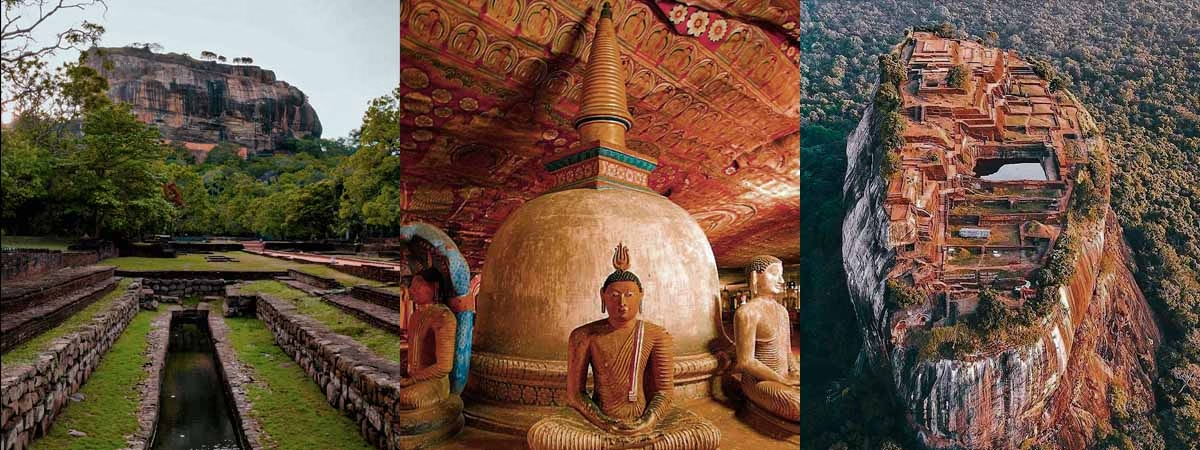
Architecture in Sri Lanka is not simply about buildings — it is about climate, landscape, ritual, and memory. Across centuries, the island’s design traditions have evolved from ancient hydraulic cities and monastic caves to colonial estates and the quiet brilliance of tropical modernism. This journey explores those layers through places where architecture feels inseparable from environment and culture.
From Geoffrey Bawa’s integration of water and space to the geometry of ancient stupas, from Kandyan craftsmanship to colonial hill-country bungalows, the experience reveals how design in Sri Lanka responds to light, terrain, and tradition. The journey unfolds gradually, allowing each region’s architectural identity to emerge naturally.
Rather than focusing only on famous buildings, this itinerary explores how people live within architecture — how courtyards shape daily life, how verandas invite conversation, and how landscapes become part of design. It is a journey through space, form, and atmosphere — quiet, thoughtful, and deeply connected to place.
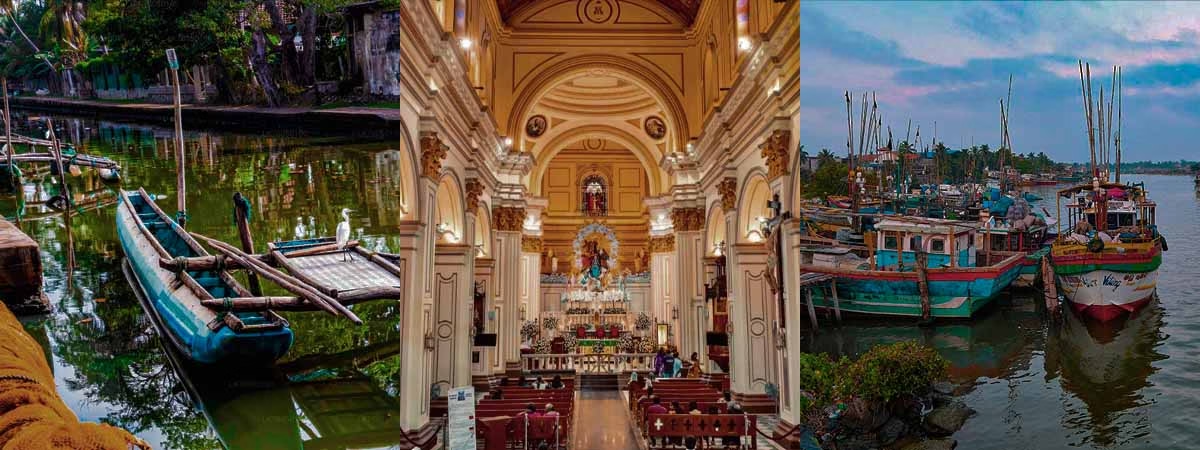
Arrival in Sri Lanka begins gently along the western coast, where Negombo’s lagoon landscapes and colonial influences create a relaxed introduction to the island. Fishing boats move slowly across the water, palm trees lean toward canals, and Dutch-era buildings quietly coexist with modern life.
The architecture here reflects centuries of maritime trade and European influence. Churches, villas, and canal systems reveal the layered history of Portuguese and Dutch presence along the coast. The evening is intentionally unstructured, allowing travelers to adjust to the tropical climate and slower rhythm.
Negombo’s calm coastal atmosphere provides a soft architectural beginning — open spaces, water reflections, and the feeling of transition from travel to experience.
Destination Significance — Negombo
Negombo introduces Sri Lanka’s colonial architectural layer. Dutch canals, Catholic churches, and coastal trading structures represent the island’s maritime history. These buildings reflect adaptation — European design reshaped for tropical climate and local materials.
The lagoon setting highlights a key architectural principle seen throughout the journey: the relationship between water, settlement, and daily life. This connection will appear again in ancient reservoirs, Kandyan lakes, and Bawa’s water gardens.
Negombo is not monumental — it is atmospheric — offering a quiet architectural beginning rooted in place and history.
Architectural Guide Notes
Day Description
The journey south follows the coastline toward Bentota, where Geoffrey Bawa’s architectural philosophy begins to reveal itself. Lunuganga, Bawa’s country estate, is not a traditional garden — it is a landscape composition where movement, perspective, and space unfold gradually.
Paths lead through sculpted greenery toward framed views of the lagoon. Walls appear and disappear, guiding the eye across water and vegetation. The experience feels less like visiting a property and more like walking through an idea.
Later, the calm river and ocean surroundings of Bentota reinforce Bawa’s belief that architecture should emerge naturally from landscape.
Destination Significance — Bentota & Lunuganga
Lunuganga represents the birthplace of tropical modernism in Sri Lanka. Bawa transformed a rubber plantation into a living architectural experiment over decades. The estate demonstrates how landscape itself can become architecture.
Bentota later became a testing ground for tourism design in the 1960s and 70s. Bawa’s hotels here showed how modern buildings could exist without disrupting natural scenery.
This region reveals architecture as composition rather than construction — a central theme of the journey.
Hotel
Architectural Guide Notes
Day Description
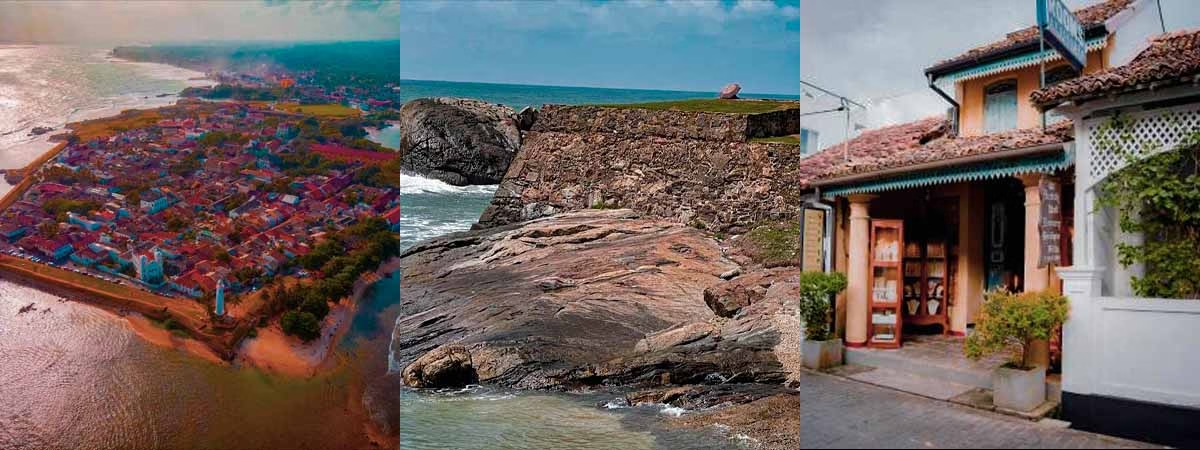
The coastal road leads to Galle Fort, where architecture shifts from tropical modernism to colonial urban planning. Inside the stone walls, narrow streets reveal Dutch townhouses, courtyards, and maritime structures preserved across centuries.
The fort feels alive rather than historic — homes, galleries, and cafés exist within buildings shaped by European engineering and tropical climate adaptation. Ocean wind moves through streets designed for shade and ventilation.
Walking along the ramparts at sunset reveals architecture shaped by defense, trade, and sea.
Destination Significance — Galle Fort
Galle Fort is one of Asia’s best-preserved colonial towns. Dutch grid planning, coral-stone walls, and verandas adapted European urban design to the tropics.
The fort demonstrates resilience — architecture designed for both climate and conflict. Its continued use as a living town reflects sustainable heritage preservation.
Here, architecture becomes urban memory.
Hotel Options
Distance: ~130 km | 2.5 hrs
Day Description
The journey north along the coast gradually transitions from colonial seaside towns into Sri Lanka’s contemporary urban landscape. Colombo, the island’s commercial capital, reveals architecture shaped by trade, migration, and modern identity. Unlike ancient cities or colonial forts, Colombo’s architecture feels layered — old and new existing side by side in quiet contrast.
The afternoon introduces Geoffrey Bawa’s urban architectural influence through visits to selected design spaces where modern Sri Lankan architecture evolved. Courtyards, shaded corridors, and water features appear within busy city surroundings, demonstrating how tropical design principles adapt even within dense urban environments.
As evening falls, the city softens. Light reflects off glass towers and colonial façades alike, creating a calm urban atmosphere. Colombo offers a different architectural rhythm — contemporary, layered, and constantly evolving.
Destination Significance — Colombo
Colombo represents Sri Lanka’s architectural transition from colonial past to modern identity. Portuguese, Dutch, and British structures remain visible across the city, while modern architects reinterpret tropical design for contemporary living.
Geoffrey Bawa’s influence is particularly important here. His work demonstrated that modern architecture in Sri Lanka could remain climate-sensitive and culturally rooted. Buildings such as Parliament and private residences reshaped architectural thinking across the island.
Colombo reveals architecture not as preservation, but as evolution — where tradition and innovation coexist.
Highlights
Activities
Hotel Options
Architectural Guide Notes
Distance: ~160 km | 4 hrs
Day Description
Leaving the coast behind, the road moves inland toward Sri Lanka’s ancient dry-zone civilizations. Forest, farmland, and reservoirs appear across the landscape, revealing the environmental foundation of early urban planning.
Arrival in the Cultural Triangle introduces architecture shaped not by ornament but by engineering and philosophy. Ancient cities here were designed around water management, agriculture, and spiritual practice. The scale of reservoirs and irrigation systems demonstrates how architecture once worked in harmony with climate and terrain.
The afternoon remains unhurried, allowing travelers to absorb the calm rural environment surrounding Sigiriya.
Destination Significance — Cultural Triangle
The Cultural Triangle represents the birthplace of Sri Lankan urban design. Ancient kingdoms developed sophisticated hydraulic systems that supported large populations while maintaining ecological balance.
Architecture here reflects Buddhist philosophy — simplicity, symmetry, and integration with nature. Monasteries, reservoirs, and palace ruins show how spirituality and engineering once shaped daily life.
This region reveals architecture as civilization itself — functional, spiritual, and environmental.
Highlights
Activities
Hotel Options
Architectural Guide Notes
Day Description
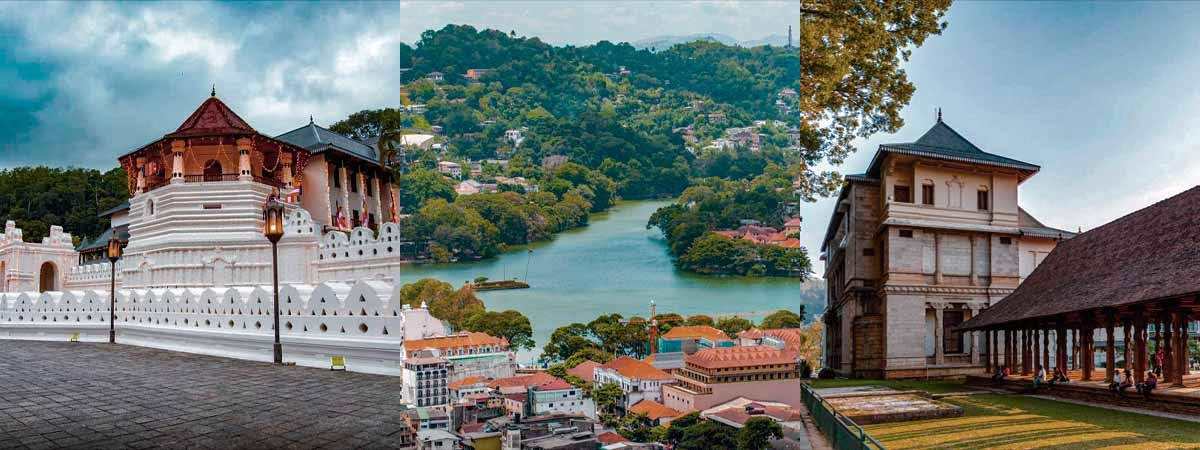
The morning begins with Sigiriya Rock Fortress rising dramatically from the plains. The ascent reveals ancient frescoes, landscaped water gardens, and sophisticated hydraulic engineering. The fortress demonstrates how architecture, art, and environment were combined into a single royal vision.
Later, the cave temples of Dambulla offer a quieter architectural experience. Built into natural rock formations, the temples merge geology and spirituality. Painted ceilings and Buddha statues create a meditative atmosphere shaped by centuries of devotion.
The day highlights two architectural extremes — royal ambition and monastic simplicity — both deeply connected to nature.
Destination Significance — Sigiriya & Dambulla
Sigiriya is one of the earliest examples of landscape architecture in Asia. The integration of gardens, water channels, and defensive structures reflects advanced planning and artistic vision.
Dambulla represents sacred cave architecture, where natural spaces were transformed into temples. These sites demonstrate the Buddhist tradition of adapting environment rather than altering it.
Together, they illustrate Sri Lanka’s architectural balance between power and spirituality.
Highlights
Activities
Hotel Options
Architectural Guide Notes
Distance: ~90 km | 3 hrs
Day Description
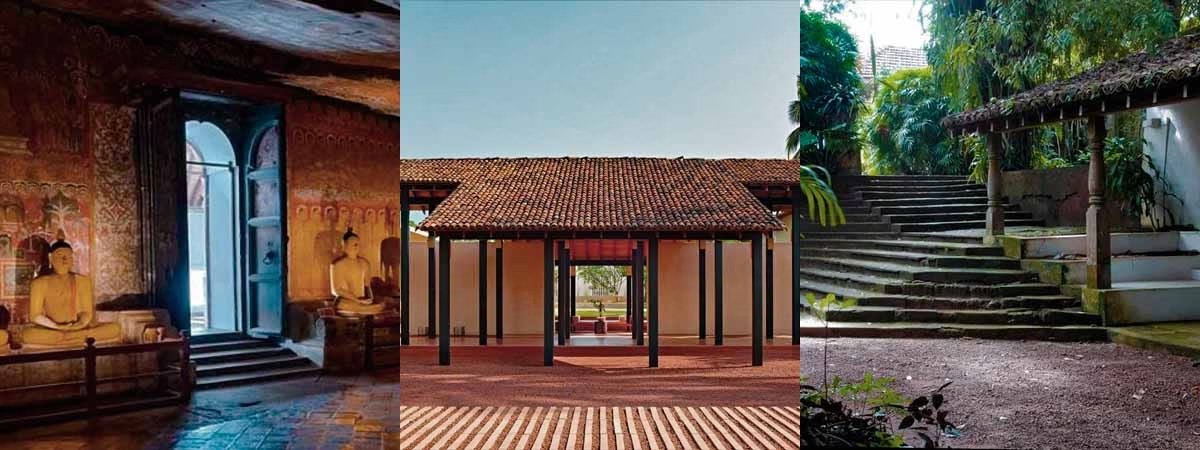
The journey into the hill country leads to Kandy, Sri Lanka’s last royal capital. The city’s architecture reflects royal tradition, religious devotion, and Kandyan craftsmanship. The lake at the city’s center creates visual harmony between temple, palace, and landscape.
The Temple of the Sacred Tooth Relic stands as the island’s most important religious structure. Its wooden carvings, tiled roofs, and ceremonial spaces reflect Kandyan architectural style shaped by climate and ritual.
Evening light across the lake reveals Kandy’s architectural calm — balanced, sacred, and human in scale.
Destination Significance — Kandy
Kandy represents Sri Lanka’s royal architectural tradition. Unlike the stone cities of the dry zone, Kandyan architecture uses wood, plaster, and tile suited to the wetter hill climate.
The Temple of the Tooth remains a living architectural site where ritual continues daily. The city’s layout around the lake reflects harmony between governance, religion, and nature.
Kandy preserves Sri Lanka’s indigenous architectural identity.
Highlights
Activities
Hotel Options
Architectural Guide Notes
Distance: ~80 km | 3–4 hrs
Day Description
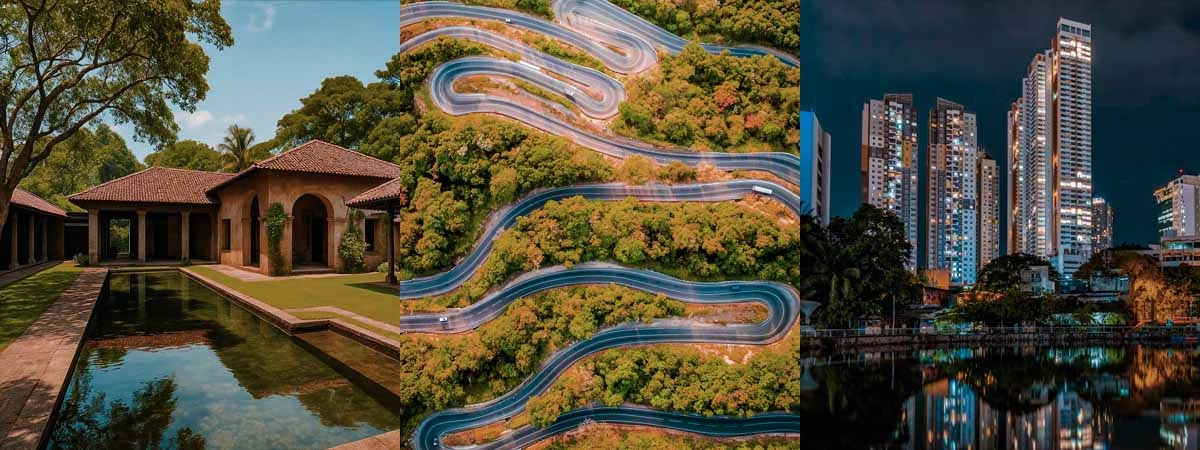
Ascending into the central highlands, architecture shifts again — this time shaped by colonial plantation life. Tea estates, stone factories, and British bungalows appear across mist-covered hills.
Colonial planter bungalows combine European design with tropical adaptation — wide verandas, fireplaces, and gardens overlooking valleys. These homes were built for climate comfort rather than display.
The slower pace of tea country allows architecture to be experienced quietly, surrounded by landscape.
Destination Significance — Tea Country
Tea country architecture reflects the colonial plantation economy. British planters introduced bungalow design adapted to mountain climate and isolation.
These structures represent both industrial history and domestic life. Tea factories show functional architecture, while bungalows reflect colonial social structure.
The region reveals architecture shaped by labor, trade, and environment.
Highlights
Activities
Hotel Options
Architectural Guide Notes
Distance: ~170 km | 5 hrs
Day Description
Descending from the mountains, the journey returns toward Colombo. The changing scenery — from misty hills to tropical plains — reflects the diversity that shaped Sri Lankan architecture across centuries.
The final evening allows reflection on the architectural story of the island — ancient cities, royal capitals, colonial estates, and tropical modernism.
Colombo’s contemporary skyline provides a quiet conclusion to the journey.
Destination Significance — Colombo (Return)
Returning to Colombo completes the architectural timeline. The city now feels different — understood within the broader context of Sri Lanka’s design evolution.
Modern Sri Lankan architecture continues to draw inspiration from ancient planning, Kandyan tradition, and Bawa’s philosophy.
Colombo represents continuity rather than conclusion.
Highlights
Activities
Hotel Options
Architectural Guide Notes
Day Description
The journey concludes with a calm departure. The architectural story of Sri Lanka — ancient, royal, colonial, and modern — lingers as a cohesive memory of space and landscape.
Destination Significance — Departure
Architecture in Sri Lanka is not confined to monuments — it lives in gardens, temples, homes, and cities. This journey reveals how design expresses culture, environment, and identity across time.
Highlights
Activities