Cooking Experiences in Sri Lanka – Discovering Authentic Flavors Through Hands-On Local Cuisine
● Introduction Cooking experiences in Sri Lanka offer foreign travelers a deeper and more personal connection to the...

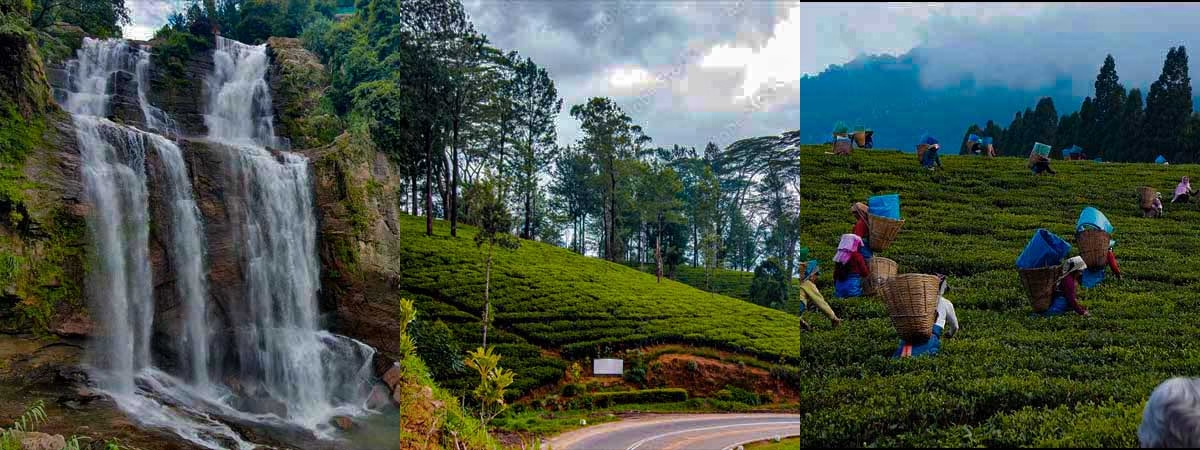
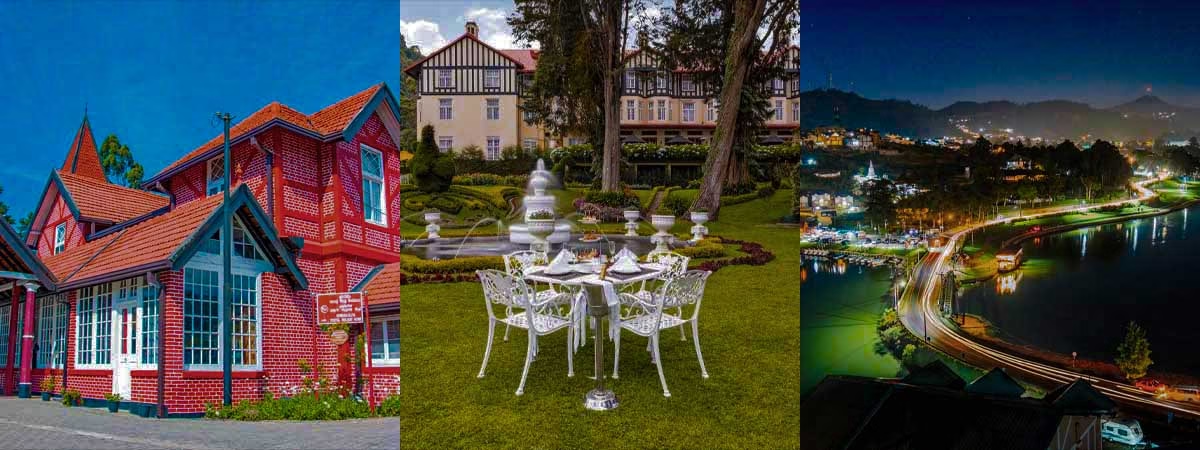
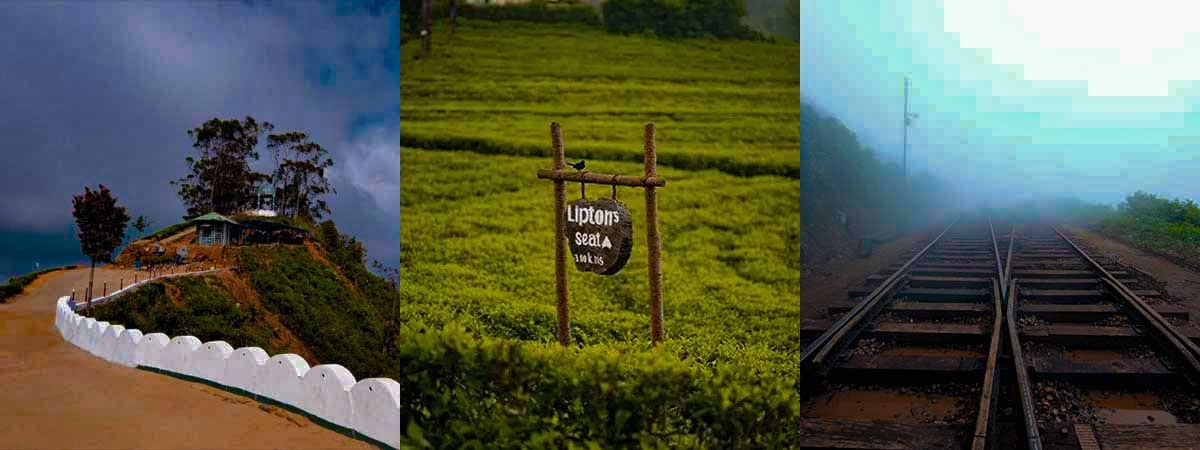
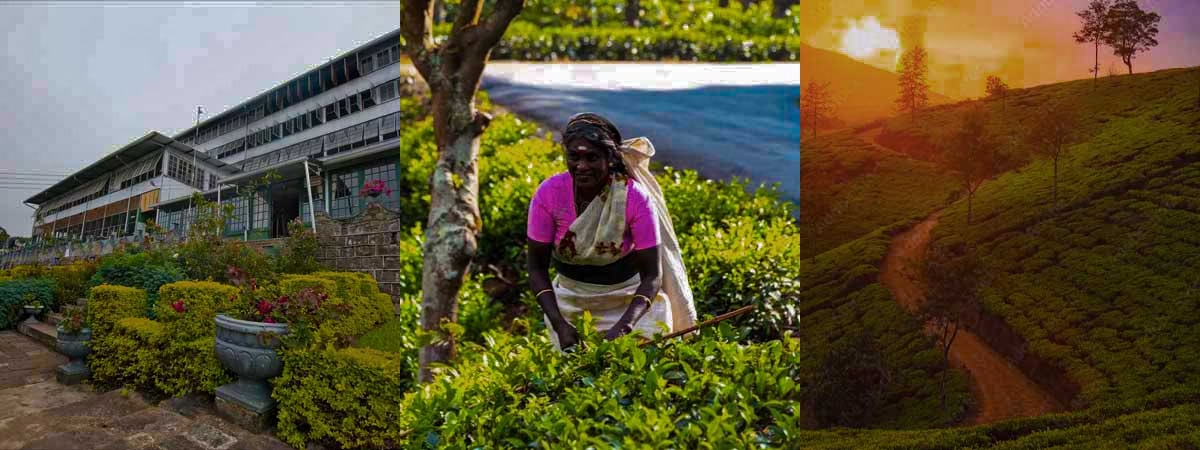
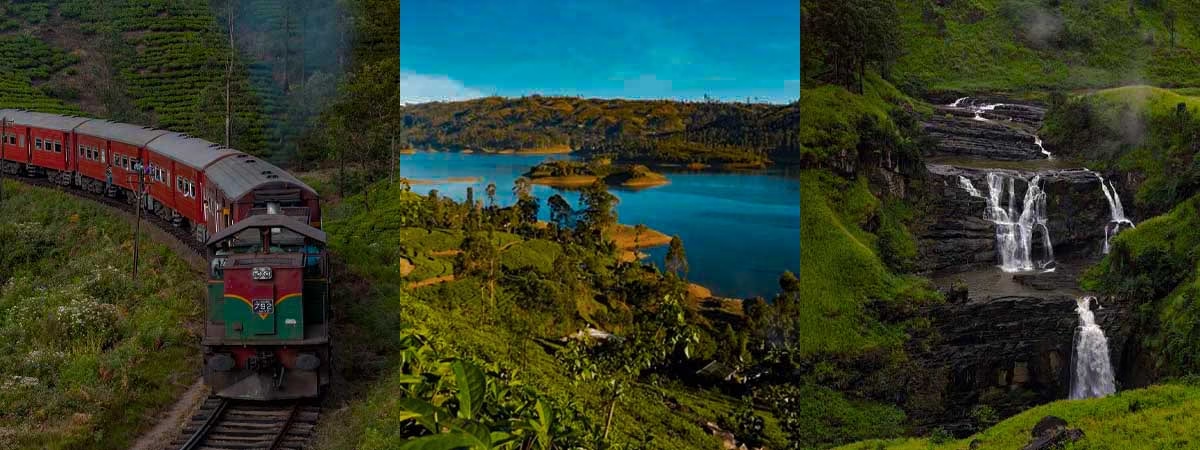
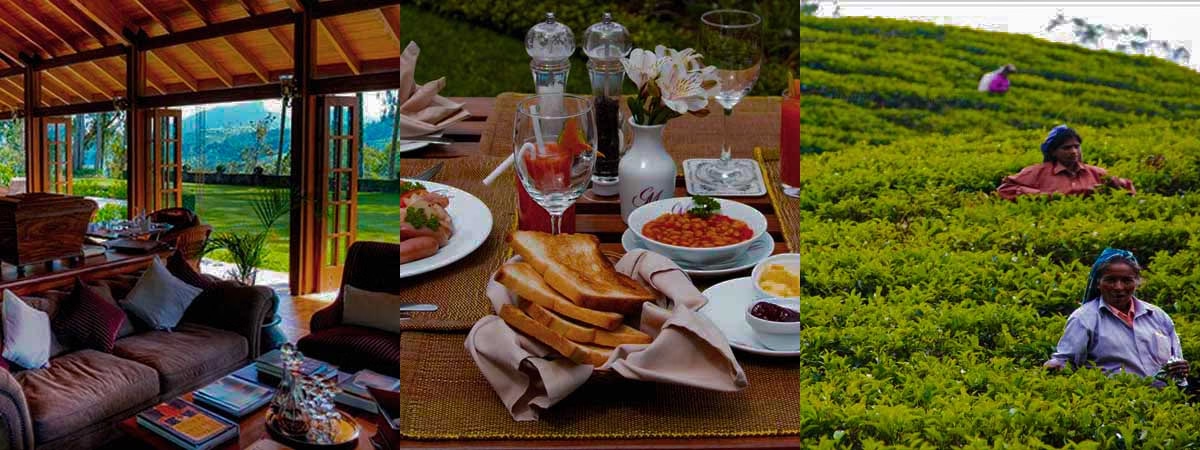
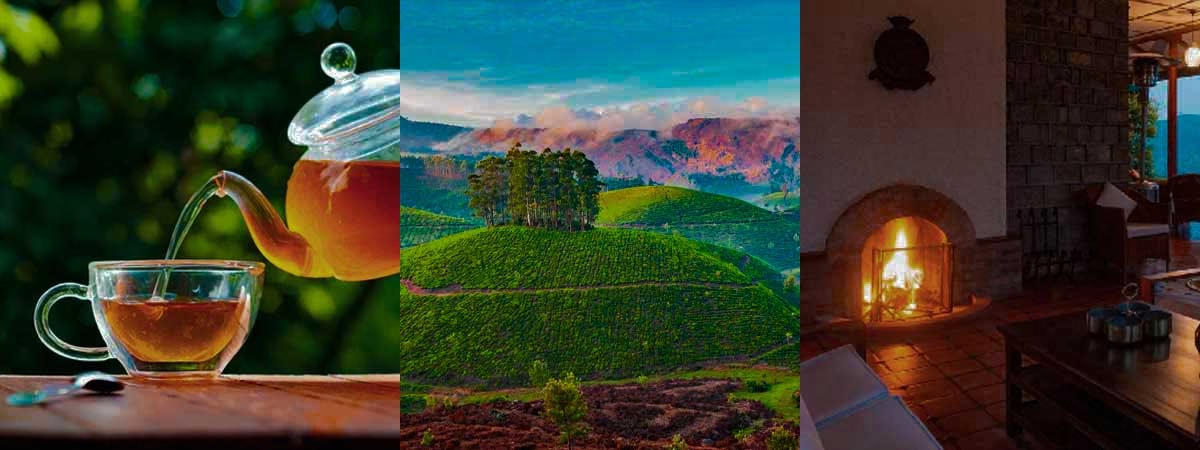
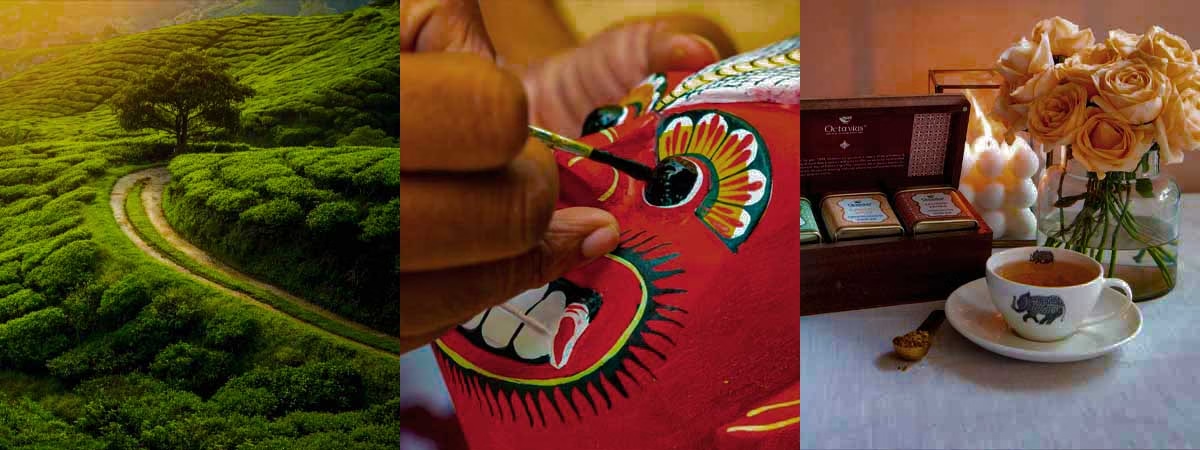
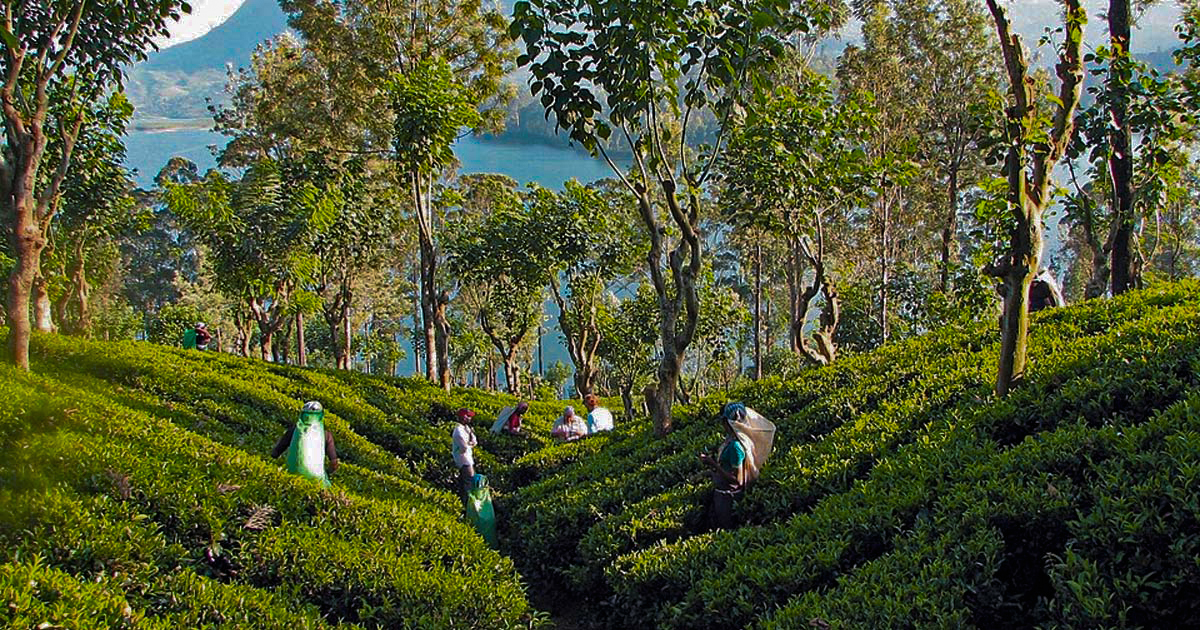
Sri Lanka’s hill country offers one of the island’s most distinctive landscapes — a world of mist-covered mountains, carefully sculpted tea plantations, colonial bungalows, and quiet villages shaped by generations of agricultural life. Tea cultivation, introduced during the 19th century, transformed these highlands into a cultural and ecological environment unlike anywhere else in Asia. Today, the region combines natural beauty with living history, where the rhythm of plantation work continues beneath cool mountain skies.
This journey explores tea country slowly and thoughtfully, allowing travelers to experience not only the scenery but also the stories behind it. From the royal hills of Kandy to the colonial charm of Nuwara Eliya, from the panoramic ridges of Haputale to the peaceful estates of Hatton, each destination reveals a different chapter of Sri Lanka’s tea heritage. Scenic train journeys, plantation walks, and time in historic bungalows create a balanced and immersive experience.
More than a tour of tea landscapes, this journey offers reflection, calm, and connection — an opportunity to experience Sri Lanka’s highlands through culture, nature, and quiet moments of discovery.
Distance: ~120 km | 3.5 hrs
Day Description
Arrival in Sri Lanka marks the beginning of a gentle inland journey toward Kandy, where the landscape gradually shifts from tropical lowlands to forested hills. Coconut groves give way to spice gardens and river valleys, and the air becomes noticeably cooler as the road climbs toward the island’s historic hill capital. The transition feels gradual and calming, offering travelers time to settle into the rhythm of the island.
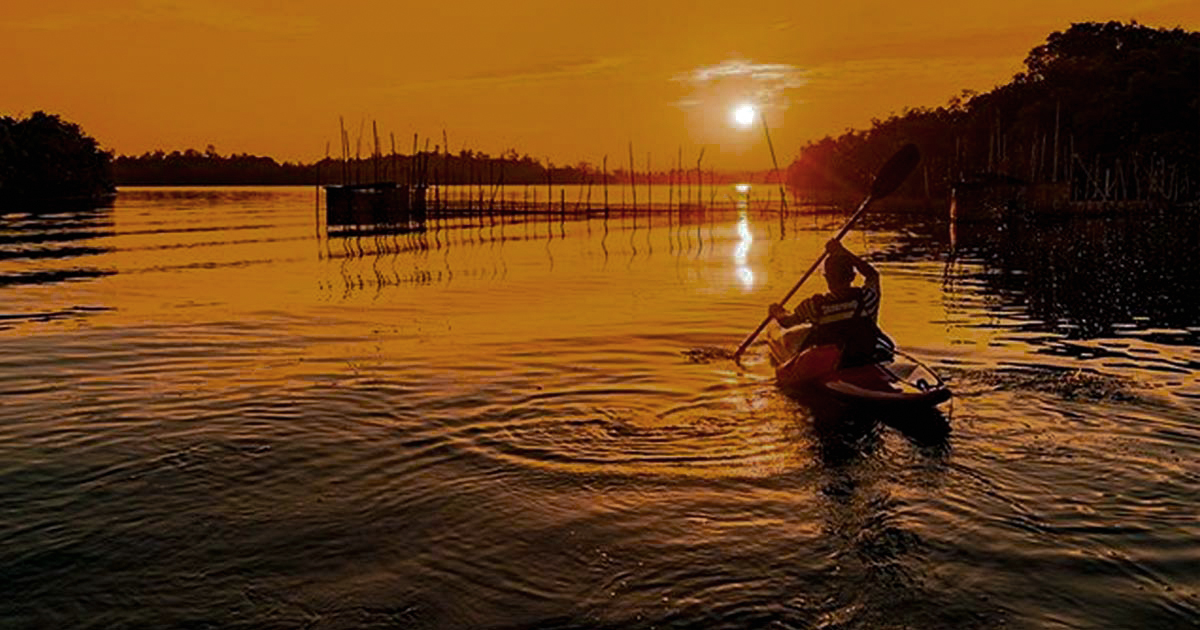
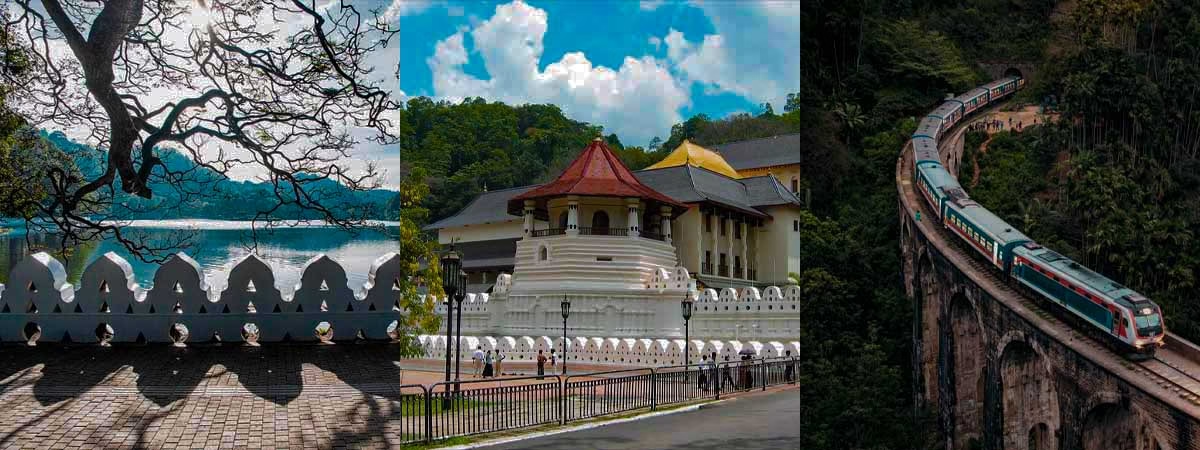
Kandy is centered around its tranquil lake, surrounded by green hills and historic buildings that reflect both royal and colonial influences. The city moves at a slower pace than the capital, with temple bells, evening prayers, and lakeside walks shaping the atmosphere. As dusk falls, the reflections of lights across the water create a sense of quiet arrival.
This first day introduces travelers to Sri Lanka’s cultural depth while gently preparing them for the cooler landscapes of tea country ahead.
Destination Significance — Kandy
Kandy holds deep cultural and historical importance as the last royal capital of Sri Lanka. Protected by mountains and forests, the city remained independent long after coastal regions fell under colonial rule. The Temple of the Sacred Tooth Relic, located beside the lake, continues to be one of the most revered spiritual sites in the country, connecting modern Sri Lanka to centuries of Buddhist tradition.
The surrounding hills of Kandy also represent the transition zone between ancient agricultural landscapes and the later development of tea plantations in the central highlands. Before tea cultivation reshaped the mountains, these valleys supported Kandyan farming communities and forest ecosystems. Beginning the tea journey in Kandy provides essential historical context, linking Sri Lanka’s royal past with the colonial transformation that followed.
By starting here, travelers experience the cultural foundation from which the hill country’s tea heritage later emerged.
Highlights
Activities
Hotel Options
Distance: ~80 km | 3–4 hrs
Day Description
The journey into tea country begins with a scenic mountain drive that climbs steadily through forests, waterfalls, and winding roads. As elevation increases, the landscape changes dramatically. Dense jungle gives way to open hillsides covered in neat rows of tea bushes, creating one of Sri Lanka’s most recognizable landscapes. Mist drifts across valleys, and small railway bridges appear along the route.
Arrival in Nuwara Eliya feels like entering a different climate and era. Known as “Little England,” the town is defined by colonial-era buildings, rose gardens, and cool temperatures rarely experienced elsewhere in Sri Lanka. Walking through the town reveals stone cottages, quiet parks, and distant mountains softened by mist.
The afternoon invites relaxation — an opportunity to enjoy the mountain air and slower rhythm of hill-country life.
Destination Significance — Nuwara Eliya
Nuwara Eliya became the center of Sri Lanka’s tea industry during British colonial rule in the 19th century. The high altitude, cool climate, and fertile soil proved ideal for tea cultivation, leading to the development of estates, factories, and plantation communities that still define the region today.
The town itself reflects colonial adaptation to a tropical mountain environment. British planters built homes, gardens, and institutions modeled after European hill stations, creating a unique architectural and cultural landscape within Sri Lanka. This blending of colonial influence with local geography shaped both the identity of tea country and the global reputation of Ceylon Tea.
Nuwara Eliya represents the historical and environmental heart of Sri Lanka’s tea-growing highlands.
Highlights
Activities
Hotel Options
Day Description
Morning begins within the tea estates themselves, where narrow paths wind through hills covered in bright green tea bushes. Workers move carefully across slopes, plucking leaves with practiced precision. The quiet rhythm of plantation life becomes clear — steady, patient, and deeply connected to the land.
At a nearby tea factory, the transformation from leaf to tea unfolds step by step. The scent of drying leaves fills the air as guides explain traditional processing methods that have remained largely unchanged for generations. Tasting different varieties reveals subtle differences shaped by altitude, soil, and climate.
The afternoon remains unhurried, allowing travelers to absorb the peaceful surroundings of the highlands.
Destination Significance — Tea Estates
Tea plantations represent one of Sri Lanka’s most significant cultural landscapes. Introduced during colonial rule, tea cultivation reshaped the central highlands economically, socially, and environmentally. Entire communities formed around the estates, creating a unique plantation culture that continues today.
The estates are not only agricultural spaces but living environments where history, labor, and global trade intersect. From hillside planting patterns to factory architecture, every element reflects the long relationship between Sri Lanka and tea production.
Experiencing a plantation directly allows travelers to understand tea not simply as a product, but as a cultural system rooted in the mountains.
Highlights
Activities
Hotel Options
Distance: ~55 km | 2–3 hrs
Day Description
Today’s journey is one of the most memorable transitions in Sri Lanka’s hill country. Leaving Nuwara Eliya behind, the road and railway line descend gently through forests, tea estates, and mountain ridges. Many travelers choose to experience this stretch by train, where open windows frame views of waterfalls, valleys, and distant peaks. The slow movement of the train allows time to absorb the landscape in a way no road journey can match.
Ella appears gradually — a small mountain village surrounded by dramatic cliffs and tea-covered slopes. The atmosphere is relaxed and youthful, yet still deeply connected to plantation life and rural traditions. Walking through the village reveals tea workers returning home, small cafés overlooking valleys, and mountain winds moving through eucalyptus trees.
The afternoon is left open to enjoy the views, breathe the cool air, and settle into the slower rhythm of hill country travel.
Destination Significance — Ella
Ella represents a different expression of Sri Lanka’s tea country — less colonial, more rural, and closely tied to village life in the highlands. While tea plantations still dominate the surrounding slopes, the town itself grew around railway routes and farming communities rather than estate administration.
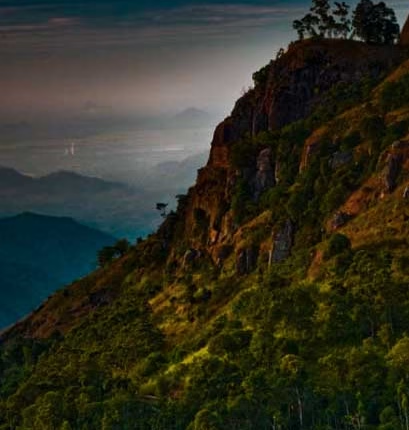
The landscape around Ella demonstrates how tea cultivation exists alongside forests, waterfalls, and small agricultural settlements. The famous Ella Gap provides one of the most dramatic natural viewpoints in the central highlands, illustrating the scale of the mountains shaped by both nature and cultivation.
Visiting Ella allows travelers to experience tea country not only as plantation heritage, but as a living rural environment where communities continue to adapt to mountain life.
Highlights
Activities
Hotel Options
Day Description
Morning begins with the gentle sounds of mountain life — birds calling across valleys and mist lifting slowly from tea fields. A walk through the surrounding hills reveals terraced plantations, forest patches, and small streams flowing through the landscape. The pace remains unhurried, allowing travelers to connect with the environment rather than rush through it.
Tea workers move steadily along the slopes, and the scent of damp earth and eucalyptus fills the air. From elevated viewpoints, layers of mountains stretch across the horizon, changing color with the movement of clouds. The experience is less about reaching destinations and more about being present in the landscape.
The afternoon offers time to rest, read, or simply enjoy the quiet mountain surroundings.
Destination Significance — Ella Highlands
The Ella highlands demonstrate the coexistence of plantation agriculture and natural mountain ecosystems. Unlike larger estate towns, this region remains closely tied to small communities and forest environments, offering a more intimate understanding of hill-country life.
Tea cultivation here exists alongside traditional vegetable farming, village settlements, and forest reserves. This balance reflects the broader story of Sri Lanka’s highlands — landscapes shaped by both colonial industry and local resilience.
Exploring Ella slowly allows travelers to experience the human and environmental dimensions of tea country together.
Highlights
Activities
Hotel Options
Distance: ~30 km | 1.5 hrs
Day Description
A short but spectacular drive leads deeper into the highlands toward Haputale. The road climbs along narrow ridges where valleys open dramatically on both sides. Tea estates appear to stretch endlessly across the hills, and clouds drift low across the landscape.
Haputale feels quieter and more remote than other hill-country towns. From its viewpoints, the southern plains of Sri Lanka can be seen far below, creating a powerful contrast between mountain and lowland environments. Walking through the town reveals simple plantation life continuing as it has for generations.
The afternoon invites stillness — a chance to observe the changing light across the hills.
Destination Significance — Haputale
Haputale occupies one of the most dramatic geographic positions in Sri Lanka’s tea country. Perched along a mountain ridge, the town overlooks both highland estates and distant lowland forests, illustrating the ecological diversity of the island.
Historically, Haputale served as an important plantation settlement during the expansion of tea cultivation. Nearby estates, factories, and colonial-era buildings reflect the economic importance of this region in Sri Lanka’s tea industry.
The town offers one of the clearest visual connections between tea country and the wider landscape of the island.
Highlights
Activities
Hotel Options
Day Description
Morning begins with sweeping views across tea estates illuminated by soft mountain light. Walking through plantation paths reveals the scale of cultivation across the hills. Workers move through fields with practiced rhythm, and distant factory whistles occasionally echo across valleys.
The day remains intentionally slow, allowing time to absorb the atmosphere of the highlands. The sound of wind through tea bushes and the cool mountain air create a sense of calm that defines this region. Travelers often find these moments among the most memorable of the journey.
As evening approaches, the hills grow quiet again, and the landscape settles into stillness.
Destination Significance — Haputale Estates
The tea estates around Haputale represent the maturity of Sri Lanka’s plantation system, where cultivation patterns, worker communities, and factory production have existed for more than a century. These estates demonstrate how tea production became integrated into the social and economic fabric of the highlands.
Unlike more developed towns, Haputale preserves the authentic atmosphere of plantation life. The region reflects continuity — landscapes and communities shaped by generations working within the same environment.
This setting provides a deeper understanding of tea country beyond its scenic beauty
Highlights
Activities
Hotel Options
Distance: ~90 km | 3 hrs
Day Description
The journey continues across the central highlands toward Hatton, where the scenery becomes softer and more expansive. Tea estates roll across valleys in gentle curves, and colonial bungalows appear among trees overlooking reservoirs.
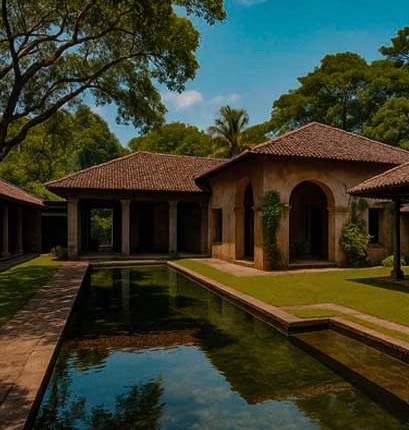
Hatton introduces a more refined plantation environment, where historic estate houses have been carefully preserved. Arrival at a colonial bungalow offers a different experience of tea country — elegant, quiet, and deeply connected to the landscape.
The afternoon is perfect for enjoying estate gardens, mountain views, and the calm rhythm of bungalow life.
Destination Significance — Hatton & Tea Bungalows
Hatton represents the heritage of Sri Lanka’s colonial tea estates at their most refined. Many plantation bungalows built during the British era remain intact, offering insight into the lifestyle of estate managers and the architectural traditions of the period.
The surrounding estates continue to produce some of Sri Lanka’s finest high-grown teas. Reservoirs, forests, and rolling hills create one of the most balanced landscapes in the highlands.
This region connects tea production with architecture, landscape design, and colonial history.
Highlights
Activities
Hotel Options
Day Description
Morning unfolds slowly in the quiet elegance of the estate. Mist drifts across reservoirs, and sunlight filters through tall trees surrounding the bungalow gardens. Walking paths lead through tea fields where the rhythm of plantation life continues uninterrupted.
Tea tastings, estate walks, and relaxed conversation define the day. The stillness of the mountains encourages reflection, offering travelers time to absorb the journey through Sri Lanka’s tea country.
Evening arrives gently, with cool air settling across the hills.
Destination Significance — Estate Living
Estate bungalows represent a unique architectural and cultural chapter in Sri Lanka’s tea history. Designed to integrate with the surrounding landscape, these homes reflect both colonial influence and adaptation to mountain environments.
Today, restored bungalows allow visitors to experience plantation life in comfort while preserving historical character. Staying within an estate environment creates a deeper connection to the landscape and its history.
Hatton offers one of the most complete tea-country experiences in Sri Lanka.
Highlights
Activities
Hotel Options
Distance: ~140 km | 4–5 hrs
Day Description
The journey descends gradually from the highlands toward the lowlands, retracing the transformation from mountain tea country to tropical plains. Tea estates slowly disappear, replaced by forests, rivers, and villages.
The return drive offers time to reflect on the landscapes, histories, and communities encountered throughout the journey. From colonial estates to mountain villages, the experience of tea country lingers long after the hills fade from view.
Departure marks the conclusion of a calm and immersive exploration of Sri Lanka’s highlands.
Destination Significance — Departure from the Highlands
Leaving tea country highlights how distinct the central highlands are from the rest of Sri Lanka. The mountains represent a cultural and environmental world shaped by agriculture, colonial history, and natural beauty.
Descending toward the coast or airport emphasizes the diversity of the island — from cool misty estates to warm tropical plains within a single journey.
The tea country experience remains one of Sri Lanka’s most memorable cultural landscapes.
Highlights
Activities
Hotel Options
Not applicable (departure day)