

● Introduction
Nestled in the cool climate of Nuwara Eliya, the Sita Amman Kovil is one of Sri Lanka’s most important Hindu temples. Dedicated to Goddess Sita, this colorful shrine holds a special place in the epic Ramayana, which tells the story of Rama, Sita, and Ravana. For foreign travelers, a visit to the Sita Amman Temple is not only a cultural experience but also an opportunity to connect with one of the greatest epics in world literature.
● The Ramayana Connection
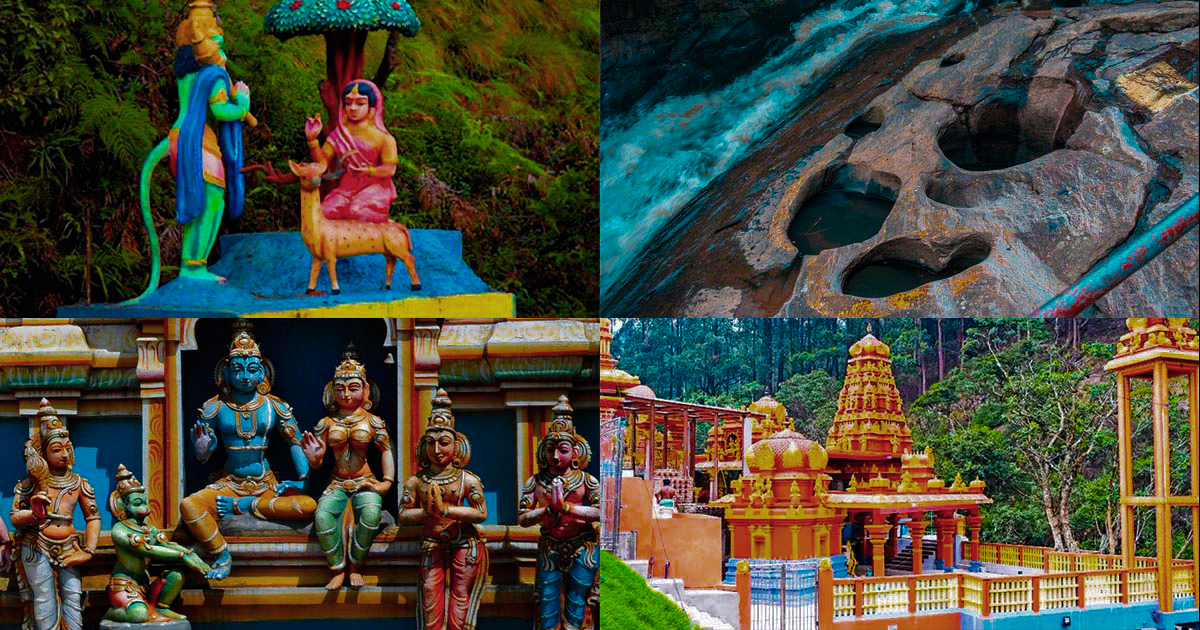
According to the Ramayana, Sita was held captive in Sri Lanka by King Ravana after being abducted from India. The Sita Amman Kovil is believed to stand at the spot where Sita was kept during her captivity. Devotees believe she prayed to Lord Rama here, and even today, travelers can see areas that are said to bear the footprints of Hanuman, the monkey god who came to rescue her. This mythological significance makes the temple one of the most visited Ramayana sites in Sri Lanka.
● Architecture and Design
The temple’s architecture reflects the vibrant style of South Indian Hindu temples. Its façade is adorned with colorful statues of Hindu gods and goddesses, with intricate carvings illustrating scenes from the Ramayana. The inner sanctum houses the idol of Goddess Sita, along with shrines dedicated to Lord Rama, Lord Lakshmana, and Lord Hanuman. The temple’s vibrant colors, detailed sculptures, and spiritual atmosphere make it a visually striking and culturally enriching experience.
● Rituals and Worship
The Sita Amman Temple is an active place of worship, attracting Hindu devotees from Sri Lanka and abroad. Daily rituals involve offerings of flowers, incense, and prayers to Goddess Sita. On special days and during festivals, the temple is filled with chanting, drumming, and devotional ceremonies. Foreign travelers are welcome to observe these rituals, which provide an authentic glimpse into Sri Lanka’s living Hindu traditions.
● Cultural and Religious Significance
For Hindus, the Sita Amman Kovil is more than just a shrine—it is a symbol of devotion, resilience, and faith. The temple stands as a reminder of Sita’s strength and purity, qualities that continue to inspire worshippers. For foreign visitors, the temple offers a unique opportunity to witness the intersection of mythology, religion, and culture in Sri Lanka’s hill country.
● Scenic Location in Nuwara Eliya
The temple is set against the backdrop of Nuwara Eliya’s misty hills, tea plantations, and cool mountain air. This picturesque location enhances the spiritual atmosphere of the shrine. Travelers often combine their visit to the temple with other attractions in the area, such as Gregory Lake, Hakgala Botanical Gardens, and tea estate tours. The combination of natural beauty and cultural significance makes Nuwara Eliya one of the most rewarding destinations in Sri Lanka.
● Festivals and Pilgrimages
The temple becomes especially vibrant during Hindu festivals such as Ram Navami and Diwali. During these times, pilgrims from across Sri Lanka and India visit the shrine to pay homage to Goddess Sita. Processions, music, and rituals fill the temple grounds, offering travelers a chance to experience Hindu celebrations at their most colorful and energetic.
● Best Time to Visit
The Sita Amman Temple can be visited year-round, but mornings and late afternoons are the best times to experience its serene atmosphere. The cool climate of Nuwara Eliya makes it comfortable for exploration in any season. Travelers visiting during Hindu festivals will witness the temple at its most vibrant, though these times are also more crowded.
● Travel Tips for Visitors
- Dress modestly, covering shoulders and knees, as the temple is a sacred site.
- Remove shoes before entering the inner shrine.
- Photography is generally allowed outside the temple but should be done respectfully.
- Hire a local guide to learn about the Ramayana stories connected to the site.
- Combine your visit with nearby cultural and natural attractions for a full day’s itinerary.
● Why Visit Sita Amman Kovil?
For foreign travelers, the Sita Amman Temple is not just a religious site but also a cultural landmark. It brings to life the epic stories of the Ramayana while offering a spiritual experience in a scenic hill country setting. Whether you are a follower of Hinduism, a student of history, or simply a curious traveler, the temple provides unique insights into Sri Lanka’s multicultural heritage.
● Conclusion
A visit to the Sita Amman Kovil in Nuwara Eliya is a journey into the heart of myth, faith, and culture. With its deep connections to the Ramayana, its colorful architecture, and its spiritual atmosphere, the temple offers one of the most meaningful cultural experiences in Sri Lanka. For travelers seeking to explore the island’s diversity, Sita Amman Kovil is a must-visit destination in the hill country.