
● Introduction
Nestled in the heart of Nuwara Eliya, Galway’s Land National Park is one of the smallest yet most biodiverse reserves in Sri Lanka. Known locally as the “Galway Invest Walk,” this 27-hectare sanctuary offers foreign travelers a peaceful escape into nature. Despite its compact size, Galway’s Land is home to a remarkable variety of flora and fauna, making it a must-visit destination for bird watchers, wildlife enthusiasts, and those seeking tranquility in Sri Lanka’s hill country.
● Historical Background
Galway’s Land was originally declared a wildlife sanctuary in 1938 and later elevated to national park status in 2006. It was established to protect the unique montane ecosystem of Nuwara Eliya, a region often called “Little England” for its cool climate and colonial charm. Today, the park stands as an important conservation area, preserving both native and migratory species that thrive in Sri Lanka’s central highlands.
● Biodiversity and Wildlife
Despite its modest size, Galway’s Land National Park boasts an impressive level of biodiversity. The park is particularly famous for its birdlife, with over 60 species recorded. Bird watchers can spot endemics such as the Sri Lanka white-eye, Sri Lanka bush warbler, and the dull-blue flycatcher. Migratory species like the Indian blue robin and Kashmir flycatcher also frequent the park, especially during the cooler months.
In addition to birds, Galway’s Land is home to mammals such as wild boar, sambar deer, and barking deer. The dense undergrowth and towering trees provide a natural habitat for countless insect species and reptiles, making it a paradise for nature enthusiasts.
● Plant Life and Landscape
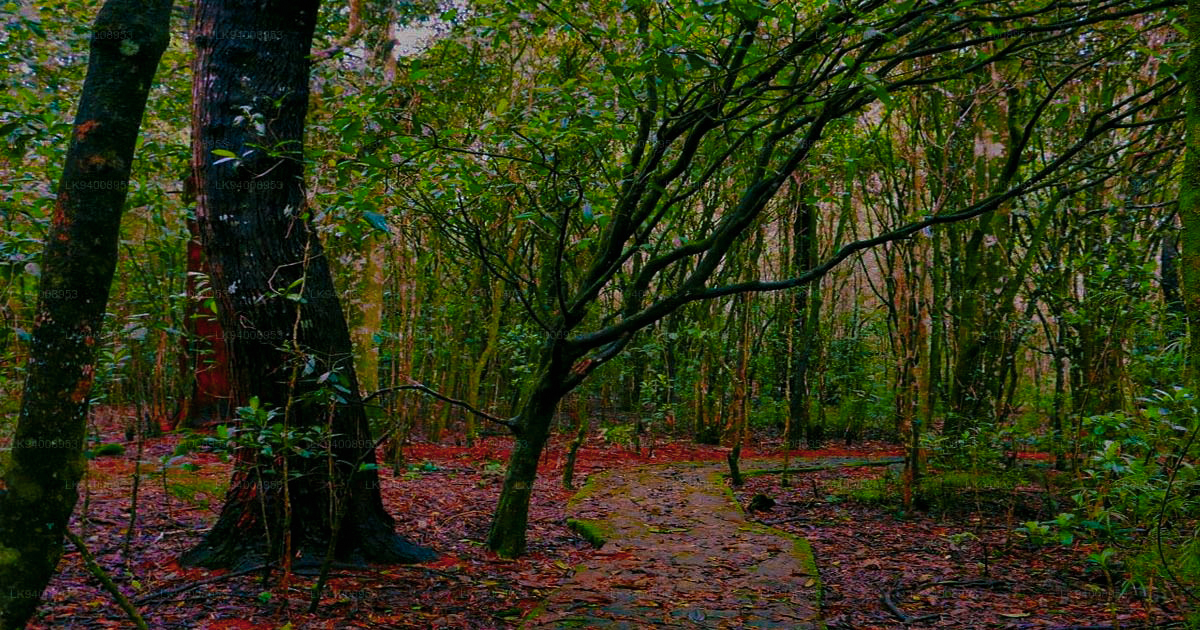
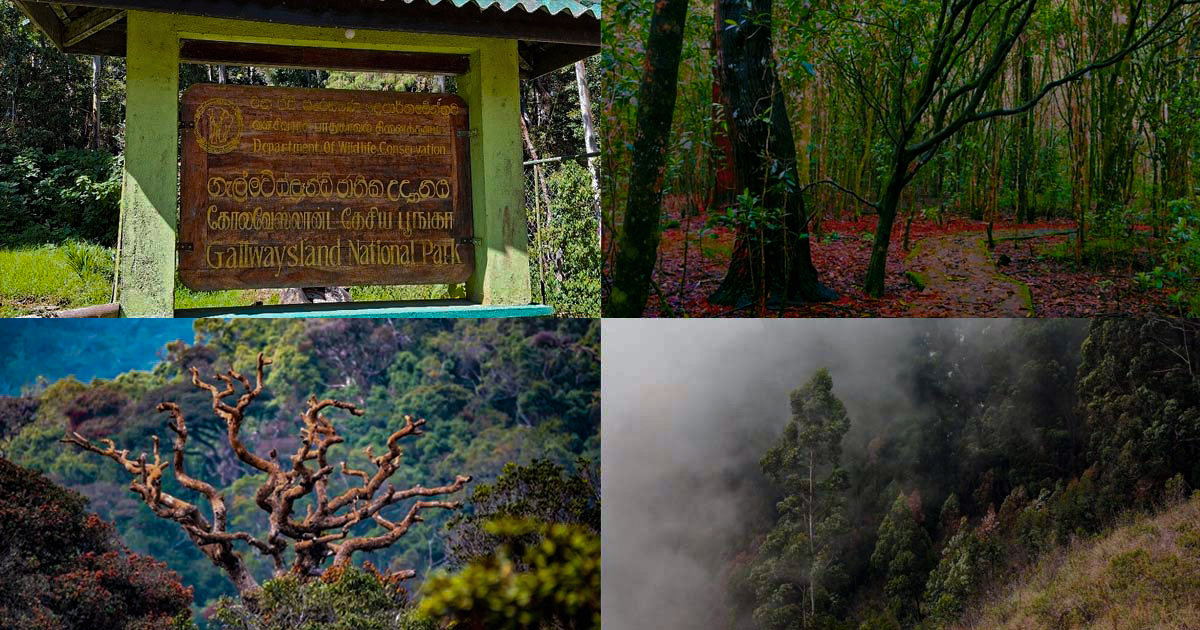
The park’s landscape is a blend of dense montane forest and open grassland, creating a unique ecosystem. It features exotic trees introduced during the British colonial era, as well as native plant species adapted to the cool climate of Nuwara Eliya. Walking trails wind through shaded pathways lined with rhododendrons, ferns, and moss-covered trees, offering a serene environment for exploration.
● Activities for Visitors
- Bird Watching: One of the best spots in Sri Lanka’s hill country to observe rare and endemic birds.
- Nature Walks: Several well-marked trails allow visitors to explore at a relaxed pace.
- Photography: Ideal for capturing wildlife, landscapes, and scenic forest trails.
- Botanical Exploration: A fascinating mix of exotic and native flora reveals the beauty of the highland ecosystem.
● Why Visit Galway’s Land National Park?
Unlike larger national parks such as Yala or Udawalawe, Galway’s Land offers a quieter and more intimate experience. Visitors often describe it as a hidden gem that allows them to connect with nature without the crowds. Its proximity to central Nuwara Eliya also makes it highly convenient, as the park is only a short drive from the town center.
● Best Time to Visit
The best time to visit Galway’s Land is between December and April, when migratory birds are most active and the weather is cool and pleasant. Early mornings and late afternoons are particularly rewarding for bird watching and photography.
● Travel Tips for Foreign Visitors
- Entry tickets can be purchased at the park entrance, with a separate rate for foreign travelers.
- Wear comfortable walking shoes, as the trails can be damp and slippery.
- Bring binoculars and a camera to fully enjoy the birdlife and scenic views.
- Dress in layers, as Nuwara Eliya weather can shift quickly.
- Combine your visit with Gregory Lake or the Hakgala Botanical Garden for a complete hill-country experience.
● Cultural and Environmental Value
Galway’s Land is not only a place of natural beauty but also a vital conservation area. It protects rare species and preserves a fragile ecosystem that might otherwise be threatened by urban expansion. For visitors, the park serves as a reminder of the importance of environmental protection in Sri Lanka’s rapidly developing hill country.
● Conclusion
A visit to Galway’s Land National Park is an opportunity to immerse yourself in the biodiversity of Sri Lanka’s central highlands. From rare endemic birds to peaceful walking trails, the park offers a refreshing escape for travelers seeking nature, photography, and serenity. As one of the smallest national parks in Sri Lanka, Galway’s Land proves that size does not define significance—this is truly a gem of the island’s hill country.